
It has been claimed for years that some of Osama Bin Laden's video and audio messages used a paid actor or a body double rather than Bin Laden himself. That is a question a computer can help with, because a human voice carries physical markers that are hard to imitate. I took three publicly available recordings, from 1997, 2001 and 2004, and ran them through an AI speaker verification model and a set of acoustic measurements. The answer that came back is not the clean yes or no the claim invites.
The quick answer: the 1997 and 2001 recordings are very probably the same man. The 2004 recording is the odd one out. Its pitch is 33% higher than 1997, its voice texture and voice quality measurements sit far away from both earlier tapes, and it scores lowest on speaker matching. Some of that is explained by it being a broadcast tape of unknown origin, and some of it is not. No AI voice cloning is involved in any of the three, because the technology did not exist yet.
The three recordings, and where each one came from
All three clips were pulled from publicly available YouTube uploads. Their differences in length matter later, because a short clip gives a model less to work with.
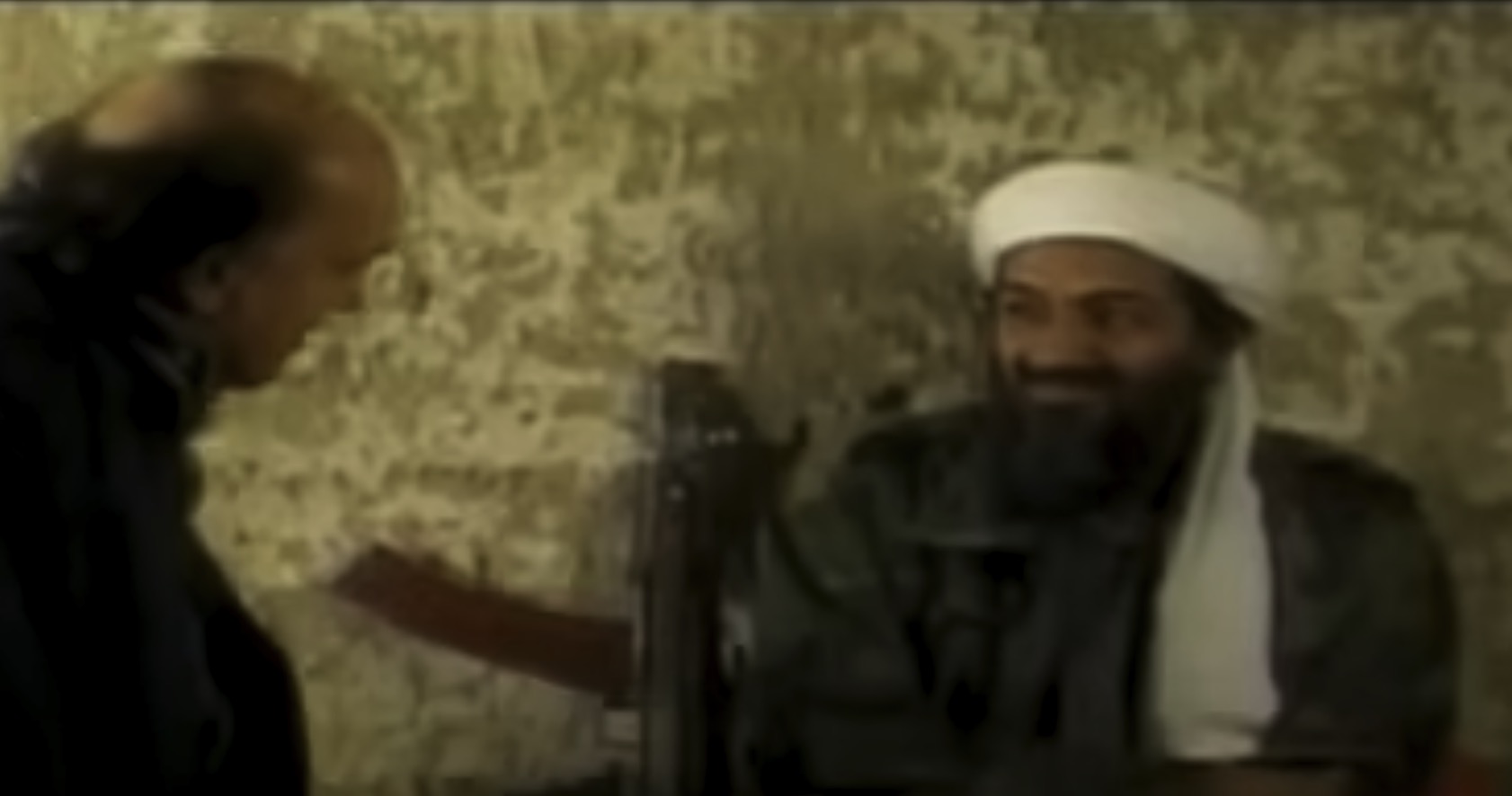
1997
Recorded decades before voice cloning existed, which makes it a clean baseline.

2001
The longest sample by far, so it gives the model the most to measure and is the most reliable of the three.

2004
A tape delivered anonymously to Al Jazeera's Pakistan offices and broadcast on 29 October 2004. Bin Laden stands alone behind a lectern, and the recording equipment and conditions are unknown.
How the analysis was done
Two separate methods were used, because they fail in different ways. One gives a single same-or-different score; the other measures the physical characteristics of the voice so you can see where any difference sits.
- All three files were stripped of silence before anything was measured. Each MP3 was loaded at 16 kHz in mono, then WebRTC voice activity detection removed silence and non-speech, which is why the speech durations above are shorter than the clip lengths.
- A neural speaker verification model turned each recording into a 256-number fingerprint, then compared them. Resemblyzer with its pre-trained GE2E model produces one vector per voice, and the closeness of two vectors gives a same-speaker score between 0 and 1.
- Every clip was also chopped into overlapping windows and cross-compared, so one lucky or unlucky second cannot decide the result. That produced between 36 and 480 separate comparisons per pair instead of one.
- Six families of acoustic measurements were extracted with librosa. Pitch, vocal tract resonance, voice texture, rhythm, voice quality, and a check for the artefacts that synthetic speech leaves behind.
The 1997 and 2001 tapes match each other better than either matches 2004
Comparing the three full recordings pairwise gives a same-speaker score for each pair. Higher means more alike.
0.725
1997 vs 2001
moderate to high
moderate to high
0.609
1997 vs 2004
low
low
0.638
2001 vs 2004
low to moderate
low to moderate
Repeating the comparison on overlapping windows rather than whole clips reproduces the same ranking, and it also shows the 2004 pairs bouncing around more.
| Pair | Comparisons | Mean | Median | Lowest | Highest | Spread |
|---|---|---|---|---|---|---|
| 1997 vs 2001 | 120 | 0.6520 | 0.6514 | 0.5837 | 0.7258 | 0.0253 |
| 1997 vs 2004 | 36 | 0.5509 | 0.5529 | 0.4446 | 0.6613 | 0.0461 |
| 2001 vs 2004 | 480 | 0.5620 | 0.5641 | 0.4316 | 0.6578 | 0.0403 |
- The 1997 and 2001 pair scores 0.725, the only pair in the range normally read as the same speaker. It also holds up best under the window-by-window test, at a mean of 0.652 with the smallest spread of the three.
- Both pairs involving 2004 land near 0.61 to 0.64, which is the zone where this kind of model cannot commit either way. That is not a finding of a different speaker. It is a finding that the recording does not confirm the same one.
- The two 2004 pairs also wander nearly twice as much between windows as the 1997 to 2001 pair does. Their spreads are 0.046 and 0.040 against 0.025, meaning the model's opinion of the 2004 tape changes depending on which second of it you feed in.
The vocal tract fingerprint is the part a person cannot fake
A voice resonates through the throat, mouth and nose, and that pattern of resonance can be measured. That shape is anatomy, so unlike pitch or pace it is not something a speaker can decide to change.
0.979
1997 vs 2001
0.968
1997 vs 2004
0.938
2001 vs 2004
- The 1997 and 2001 recordings resonate almost identically, at 0.979. Two recordings four years apart sitting that close is what the same anatomy looks like.
- The 2001 and 2004 pair drops to 0.938, the lowest of the three, and that drop happened in three years. For comparison, the Ghislaine Maxwell recordings stayed above 0.97 across a 35 year gap, so a larger gap over a much shorter period is worth noticing.
- The 2004 tape's overall sound tilt sits far from both earlier recordings, at 32.6 against 111.6 in 1997 and 161.7 in 2001. Something about how the 2004 recording distributes its energy is genuinely unlike the other two.
Pitch rises across all three, which is the wrong direction for an ageing man
Fundamental frequency is how fast the vocal folds vibrate, and it is the single easiest thing on this page for a speaker to change on purpose.
| Pitch measurement | 1997 | 2001 | 2004 |
|---|---|---|---|
| Average | 116.7 Hz | 143.6 Hz | 155.6 Hz |
| Middle value | 119.6 Hz | 142.2 Hz | 151.6 Hz |
| How much it varied | 32.8 Hz | 14.9 Hz | 17.7 Hz |
| Total range | 110.4 Hz | 139.0 Hz | 140.0 Hz |
- Pitch climbs steadily from 116.7 Hz in 1997 to 155.6 Hz in 2004, a rise of 33% in seven years. An adult man's voice normally holds steady or settles slightly lower as he ages, so a rise of that size across three recordings is the opposite of what you would predict.
- The 1997 clip's pitch also jumps around more than twice as much as either later recording. It varied by 32.8 Hz against 14.9 and 17.7, which usually means a more conversational delivery rather than a different man.
- Pitch alone proves nothing, because it is the one measurement here that a speaker can consciously push up or down. It matters only because it points the same way as the voice texture and voice quality numbers below.
The 2004 tape sounds physically different, not just differently recorded
Two more families of measurement describe the texture of a voice: how its energy spreads across frequencies, and how the vocal folds behave.
| Voice texture measurement | 1997 | 2001 | 2004 |
|---|---|---|---|
| Brightness centre | 1512.5 Hz | 1029.3 Hz | 2649.1 Hz |
| Spread of energy | 1604.4 Hz | 1077.5 Hz | 1886.1 Hz |
| Upper cut-off | 3078.9 Hz | 1975.6 Hz | 4758.2 Hz |
| How noise-like | 0.0311 | 0.0018 | 0.0693 |
| Voice quality measurement | 1997 | 2001 | 2004 |
|---|---|---|---|
| Zero crossing rate | 0.1135 | 0.0861 | 0.2502 |
| Variation in that rate | 0.0767 | 0.0515 | 0.1148 |
| Average loudness | 0.0140 | 0.0228 | 0.0367 |
| Variation in loudness | 0.0063 | 0.0076 | 0.0242 |
- The 2004 recording is more than two and a half times brighter than the 2001 one, with its brightness centre at 2649 Hz against 1029 Hz. Its upper cut-off is 2.4 times higher and it is 38 times more noise-like, all of which a different microphone and a broadcast chain could plausibly cause.
- The 2004 tape's zero crossing rate is nearly three times the 2001 figure, at 0.250 against 0.086, and that one is tied to how the vocal folds themselves behave. This is the measurement that recording equipment should not be able to move much, which is why it carries more weight here than the brightness numbers.
- Loudness in the 2004 tape swings three times as widely as in 2001, at 0.024 against 0.008. A lectern address rather than a seated conversation would explain part of that, and broadcast processing would explain more of it.
Speaking speed is nearly identical across all three
Rhythm is measured here as how many syllable onsets occur per second, which is a rough proxy for talking speed.
| Rhythm measurement | 1997 | 2001 | 2004 |
|---|---|---|---|
| Syllables per second | 7.12 | 7.29 | 7.26 |
- All three recordings sit between 7.12 and 7.29 syllables per second, a difference of under 2.4%. Talking speed that stable across seven years fits one person with one set of speech habits.
- Speaking speed is also one of the easier things for an impersonator to copy, especially with reference tapes to practise against. So this points towards one speaker without being able to settle the question.
No AI voice cloning is involved in any of the three
Synthetic speech leaves marks. Two of them are checked here: whether pitch wobbles the way a real larynx wobbles, and whether loudness has natural micro-variation.
| Artefact check | 1997 | 2001 | 2004 | Reading |
|---|---|---|---|---|
| Pitch wobble | 5.444 Hz | 3.942 Hz | 5.230 Hz | All natural, 2 to 10 Hz expected |
| Loudness micro-variation | 0.00279 | 0.00335 | 0.01053 | 2004 raised, 3 to 5 times the others |
- All three clips wobble in pitch within the 2 to 10 Hz range that a living larynx produces, so none of them is synthetic. The strongest argument is simply the calendar: usable neural voice synthesis did not arrive until around 2016, more than a decade after the last of these recordings.
- Any substitution in these tapes would have to have been a human impersonator, not a machine. That raises the bar considerably, because a person can copy pitch and pace but not the resonance of somebody else's throat.
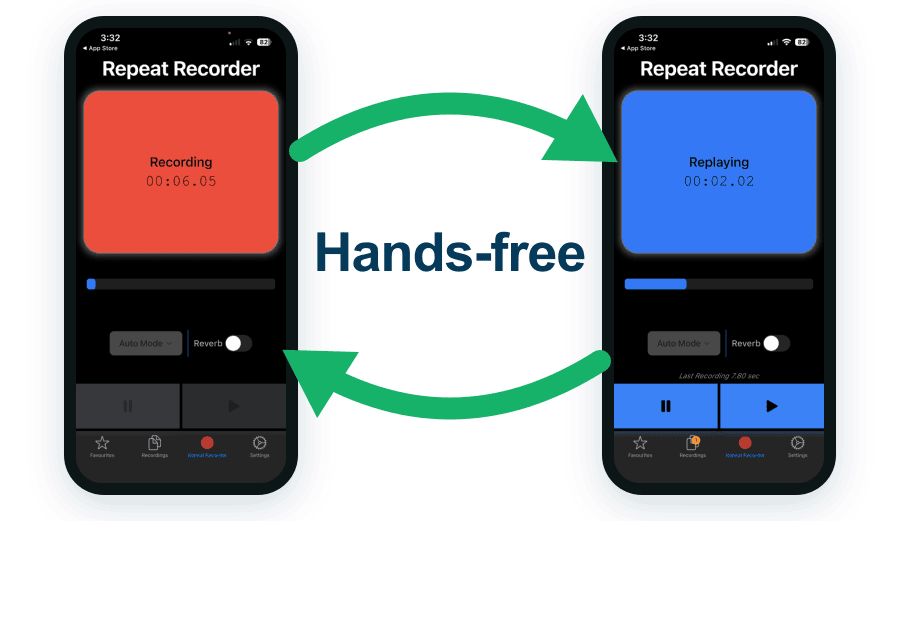
Hear pitch and pace in your own voice with Repeat Recorder
Almost everything measured above is something you can hear once you listen to the same few seconds enough times, and the hard part is the listening rather than the hearing. Repeat Recorder, my own app, exists for that one job: it records you, plays the take straight back about a second later, and starts recording again without you touching the phone.
- Hearing your own pitch drift takes back-to-back playback, which is exactly what a one second turnaround between recording and replay gives you. The 33% pitch rise measured across these three tapes is large enough that anyone would catch it by ear, and far smaller drifts in your own voice are audible the same way once the gap between speaking and listening disappears.
- Speaking speed is the one measurement that stayed within 2.4% across all three recordings, and it is also the easiest thing to check on yourself. Record the same sentence on two different days, replay both, and you will hear whether your own pace holds as steadily as Bin Laden's did.
- Any take can be looped once, a set number of times, or until you stop it, so a single phrase can be studied rather than merely played. Hands-free mode keeps the loop running while your hands are busy, and a countdown before each recording gives you a moment to settle before you speak.
Could one man's voice really change this much in seven years?
This is where the analysis has to be honest about what it cannot separate. Several ordinary things move these numbers, and one of them moves them a lot.
| Possible cause | How much it can move | Does it explain the 2004 tape? |
|---|---|---|
| Ageing about seven years | Minor | No, because pitch normally falls with age and this rose 33% |
| Illness or declining health | Moderate | Possibly, though the widely reported kidney disease would usually lower pitch and add breathiness |
| Stress or emotional state | Moderate | Partly, since stress can lift pitch 10 to 20%, but 33% is beyond that |
| Microphone and room | Significant | Partly, for brightness and noisiness, but not for vocal tract resonance |
| Formal address rather than conversation | Minor | Partly for pitch, but it would not treble the zero crossing rate |
| Broadcast compression and re-encoding | Significant | Yes, the Al Jazeera chain could move brightness and loudness a long way |
| Vocal tract anatomy | Cannot change | Unresolved, since 0.938 is lower than expected over three years but still high |
- The single best explanation for the 2004 differences is that it is a broadcast tape of unknown origin, and it genuinely accounts for the brightness and noisiness figures. It was delivered anonymously to Al Jazeera and then transmitted, so it passed through compression and processing that the other two never went near.
- Recording conditions do not normally move vocal tract resonance or zero crossing rate, and both of those moved. That is the part of the 2004 result which the broadcast explanation leaves behind, and it is why the honest verdict is unresolved rather than debunked.
- The 1997 clip holds only 6.6 seconds of speech, which is thin evidence for a model that works better with more. Every conclusion involving 1997 should be read as weaker than the ones involving the 62 second 2001 recording.
What this analysis cannot tell you
These results came from one model and three compressed clips off the internet. That limits what they can settle.
- Only one speaker verification model was used, so this is not forensic evidence. A forensic conclusion needs several models, uncompressed source audio and a human expert, and it would still be expressed as a likelihood rather than a fact.
- All three files are compressed MP3s taken from YouTube, so some of the difference measured is compression rather than voice. That affects the brightness and noisiness figures most, and the vocal tract measurements least.
- The three recordings were made in completely different circumstances, and the 2004 one has no known provenance at all. Nobody can say what microphone was in the room, or how many times the tape was copied before it was broadcast.
- All three recordings are in Arabic and regional dialect variation was not controlled for. Dialect shifts can move some of the same measurements this analysis is reading as voice.
- The tools were Resemblyzer with its GE2E model, librosa, WebRTC voice activity detection, and Python with NumPy and SciPy. Anyone wanting to check the working can reproduce it with the three linked source clips.
Conclusion: two of the three Bin Laden tapes are genuine
- The 1997 and 2001 tapes are the same man. Those two are not fake. They match at 0.725 on speaker verification and 0.979 on vocal tract shape, which is what one person sounds like on two occasions.
- The 2004 tape does not match the other two, so it could be somebody else. Its vocal fold measurement is three times higher than 2001, and the Al Jazeera broadcast chain cannot explain that one.
- Two genuine, one doubtful, and nobody can call the 2004 tape either way from public audio. Anyone claiming certainty about it, in either direction, is going past what these recordings can show.