
Facebook Groups are the quiet winner of this whole comparison. They reach 40 to 50% of their members where a Page reaches about 1.4% of its followers, they cost the least to produce of any channel here, and they convert warmly. The bill comes as daily community management rather than production hours. This is one section of a larger piece; the full comparison table puts all nine channels side by side.

 Facebook Groups reach 5 to 10 times more people than a Page
The same company that killed Page reach still gives Groups real free distribution.
- A Facebook Group post reaches 40 to 50% of its members against about 1.4% of a Page's followers, so a 10,000 member group reaches 2,000 to 4,000 people per post where the same size Page reaches 200 to 600.
- A Facebook Group post costs 5 to 30 minutes to make, because it is a discussion prompt, a poll or a quick tip with no video to produce.
- Documented Facebook Groups go from nobody to over 500 members in under three months, and those members stay, because joining a group is a deliberate act rather than a swipe.
- A Facebook Group post competes with the handful of other posts in that group this week, where a Reel competes with the whole internet.
- Facebook Group threads keep drawing comments for days and older ones resurface, so a discussion lasts longer than any other Facebook format.
- A warm community you show up to daily turns into sign-ups better than cold feed traffic, though Facebook owns the group and members still need a nudge to click a link out of it.

Facebook itself recommends your Group to strangers, and that is where most members come from
New members do not arrive through one channel. They arrive through a loop, and Facebook drives most of it.
- Facebook's own Suggested Groups pushes your group at people who are not members, and what Meta says it looks at is mostly about that person rather than about your group.
- A good discussion gets dropped into the feeds of people who are not members, labelled Suggested for you, so one thread can recruit strangers on its own.
- Facebook tells people when their friends are already members of your Group, and people join where their friends are.
- Early growth comes from people searching a topic and from members inviting friends, before Facebook has enough signal to recommend the group by itself.
- A public Facebook Group has posts that are searchable on Facebook and Google, while a private one hides the posts and keeps its name and description public.
- One of the models Meta names for Suggested Groups predicts how likely a person is to comment in a group before it suggests that group to them.

A Facebook Group builds up reach while every Reel starts again from zero
This is the difference that decides whether a Group suits you, and it has nothing to do with production quality.
- Every Reel or TikTok post enters the recommendation pool on its own, so a hit last week buys the next video almost nothing.
- Every member a Facebook Group wins is added to the reach of every future post, so month six starts from everything months one to five built rather than from zero.
- A Facebook Group will almost never hand you 500,000 views overnight the way one lucky Reel can.
- What a Facebook Group gives back instead is a predictable few thousand people who will see the next thing you post.
- Running a Facebook Group is small daily work, answering questions and prompting discussion and moderating, and the reward arrives late.
- A Facebook Group goes quiet within weeks of you stopping, and a quiet group stops being recommended to new people.
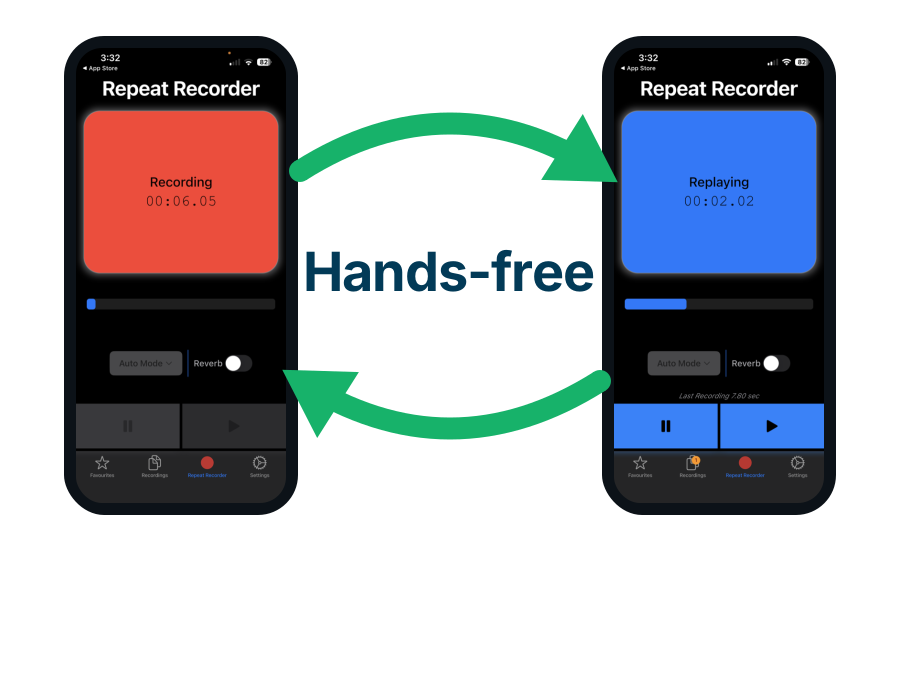
Use Repeat Recorder to rehearse a spoken Facebook Group post
The bill for a Group is daily presence rather than production hours, and the fastest thing to post daily is you answering one member's question out loud. Repeat Recorder, one of my own apps, records you, plays the take straight back and starts recording again without you touching the phone.
- Repeat Recorder plays each take back automatically and then starts recording again, so you can run the same thirty second answer five times without picking the phone up.
- A Facebook Group post costs 5 to 30 minutes, and rehearsing a spoken answer twice still fits inside that. The second take is usually the one that gets to the point in the first sentence.
- Takes worth keeping go into favourites and into folders you name yourself, so the same questions that come up in every community get the answer you already worked out.
Conclusion: when a Facebook Group is worth growing
- A Facebook Group post reaches 40 to 50% of its members against about 1.4% for a Facebook Page.
- Facebook's own Suggested Groups brings you new members, and it predicts how likely each person is to comment before it shows them your group.
- A Facebook Group post costs 5 to 30 minutes and needs no video.
- Start a Facebook Group only if you will show up in it every day, because a quiet group stops being recommended.