Timing is a small but real edge when you reach out to a creator, and almost everyone gets it slightly wrong for one reason: the best moment to send is set by the creator's local clock, not yours. If you are in Perth pitching a creator in Los Angeles, the perfect send time on their clock is the middle of your night. The tool below fixes that. It reads your time zone from your browser (and falls back to Perth, Western Australia if it cannot), lets you say where the creator is, and converts the ideal send windows into your own local time, plus it tells you whether right now is a good moment. This is the timing companion to the full guide on how to contact influencers directly.
The short version: Send email on Tuesday or Thursday morning, about 8 to 10 AM in the creator's local time; send a DM midweek, early evening their time. Because that is the creator's clock, use the tool below to convert it to your local time. Then follow up once (twice at most) a few days later, keep the email to one link and no attachments, and skip hype words. Timing is a tie-breaker; personalization and following up matter far more.

Find your best window in your own local time
Pick where the creator is and the tool converts the ideal send windows into your own local time. It remembers your last choices, so next time it opens the way you left it.
The outreach message builder, ready to copy
The tool above tells you when to send; this one writes what to send. Fill in the blanks and it builds a ready-to-send email or DM in the shape that gets replies, with copy buttons. It is the same builder from the full outreach guide.
When to send is a small edge, not a rule
- Email: Tuesday or Thursday morning. The most commonly cited window is mid-morning (roughly 8 to 10 in the recipient's local time) midweek. Monday's inbox is a backlog and Friday afternoon is checked-out, so avoid both. Treat this as a tie-breaker, not a strategy.
- DMs: midweek, later in the day. A DM gets seen when the creator is actually in the app, which skews to late afternoon and evening. Sending right after you have engaged with a fresh post of theirs helps more than the clock does.
- Do not over-optimise the send hour, because personalisation matters far more. All of this timing data is averaged across huge, mixed audiences. Personalization and following up move the needle far more than send time, so spend your effort there.
How to follow up without being annoying
- Follow up on creator outreach once, or twice at the very most. A single gentle nudge a few days after the first message is normal and expected. Most positive replies to cold outreach only come after a follow-up, and roughly half of senders never send one, so this is the easiest edge you can take.
- Space follow-ups two to five days apart and add one new thing each time. Wait two to five days, and make each follow-up add one new thing (a sweetened offer, a quick result, more creative freedom) rather than just “bumping this up.”
- Stop after three or four messages, because spam complaints start rising. Past three or four total touches, you get diminishing returns and rising spam complaints. Two well-spaced messages, then move on to the next creator.
Use Repeat Recorder to read your outreach email out loud
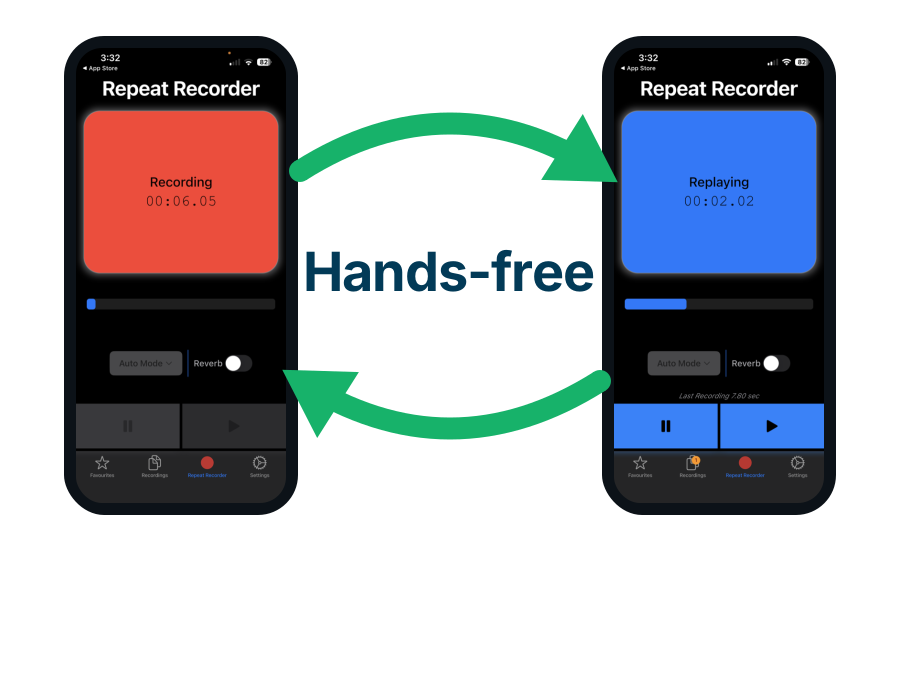
A follow-up only earns its place if it adds one new thing and still takes seconds to get through, and the quickest way to find out whether yours does is to say it out loud. A vague ask, a pushy tone and a paragraph nobody will finish are all obvious the moment you hear the message, and all invisible on the screen you just typed it on. Repeat Recorder, one of my own apps, records you reading it and plays the take straight back without you touching the phone.
- Repeat Recorder replays each take on its own and then starts recording again, so you can read the same two-line follow-up five times without touching the phone. That is the entire app. It was built for language practice and speech rehearsal, and hearing your own cold email read back is the same job with different words.
- A first outreach message has to be short enough to read in about ten seconds, and reading it aloud is the only test that catches when it is not. If your recording runs to half a minute, the creator was never going to reach the end of it. Time the playback and cut until it fits.
- Every follow-up is meant to add one new thing rather than repeat the first message, and folders you name yourself keep those versions apart. Record the opening message and each follow-up into one folder for that creator, mark the wording you would send again as a favourite, and you can hear the whole sequence in the order they received it.
How to land in the inbox instead of the spam folder
- Send from a real, human-looking address, on an established domain. Two options both work: a normal Gmail or Outlook account (for example yourname@gmail.com), or your own brand domain (for example alex@yourbrand.com) as long as it is not freshly registered. Either way the address should look like a person, not a robot. What to avoid: a no-reply@ or info@ blast address, and a brand-new domain you bought this week, spam filters distrust domains with no history until they have “warmed up” over a few weeks of normal sending. If your brand domain is brand new, send from your Gmail or Outlook for now.
- Do not mass-send identical emails. Bounces and large identical blasts hurt your sender reputation, so send small, personalized batches rather than one big automated send.
- Put one link and no attachments in a first outreach email, or you look like spam. More than a link or two, or a PDF deck, raises your spam score regardless of content and trips enterprise security scanning. Send the media kit after they reply.
- Avoid all-caps FREE, act now and guaranteed, which trip spam filters. All-caps “FREE,” “act now,” “guaranteed,” and a pile of exclamation marks read as spam to both filters and people. It is the pattern, not one word, that gets you filtered.
- A generic opener or an unfilled merge field gets your email deleted on sight. A generic opener, the wrong name or an unfilled “[username]” merge field, no compensation mentioned, a wall of text, a vague ask, or a pushy tone. Every one of those says “this was a blast,” and a blast gets no reply.
The whole game is respect made visible: a message short enough to read in ten seconds, specific enough that only this creator could have received it, sent at a time that suits them, and clear enough to answer with a single yes. Do that, follow up once, and you will out-perform brands paying thousands for a tool to do it worse.
Conclusion: the best time to contact influencers, in one glance
- Email a creator on Tuesday or Thursday between about 8 and 10 AM, and send a DM midweek in the early evening, both on the creator's own clock. Those windows follow their time zone rather than yours, which is exactly what the tool above converts: from Perth, the perfect send time for a Los Angeles creator falls in the middle of your night.
- The hour you send at is only a small edge, because personalising the message and following up matter far more than the clock does. Every timing figure here is an average across huge, mixed audiences, so an hour either way counts for little next to a message only this one creator could have received.
- Send one follow-up two to five days later that adds one new thing, because most positive replies to cold outreach only arrive after a follow-up. Roughly half of senders never send one at all, which makes it the easiest edge available. Stop after three or four messages in total, the point where extra messages stop earning replies and spam complaints start rising.