
Every small brand owner I know hits the same wall. You have built something decent, you know a few creators could put it in front of exactly the right people, and then you look at the rates and quietly close the tab. The good news I kept running into while researching this is that the pricing that scares you off is the wrong pricing to look at. The creators who are cheapest are also, for a brand on a budget, usually the most effective per dollar, and the tools to find and vet them are mostly free. This is the plain-English version of what I found, written for someone spending hundreds, not tens of thousands, and using the small products I build as the running example (Repeat Recorder, Paint Vlix and Camera to Clipboard). If you want the paid-ads side of the funnel, I have separate write-ups on Meta, Reddit and Google ads, but you do not need any of them here.
The short version: The best bargain is almost always the smallest creator, not the biggest. Nano creators (1K to 10K followers) and micro creators (10K to 100K) charge the least and carry the highest engagement (nano often 5 to 10 percent versus 1 to 2 percent for mega accounts), so they tend to win on cost per customer even though the big names win on raw reach. Real 2025-2026 rates start around $20 to $200 a post for nano, and marketplace averages are modest (roughly $198 to $675 per collaboration depending on platform), which is why 47 percent of brands spend under $10,000 a year on this. Find them three ways: marketplaces (fast, filtered), direct outreach (free, best rates) and Fiverr-style gig sites (cheap reusable content). Creators in lower-cost countries can start near $5, but only pay off if their audience is genuinely your audience. Pay with a flat fee plus a small commission or a free product, and before you pay anyone, check the engagement rate: under 1 percent on a small account is the classic fake-follower tell.

The smallest creators are usually the best bargain
The instinct is to chase the largest audience you can afford. For a brand on a budget that instinct is backwards, and the numbers are lopsided enough to matter:
- Small accounts are far more engaged. Engagement rate falls as follower count climbs. Nano creators commonly run 5 to 10 percent engagement, and micro accounts several times the rate of celebrity accounts, while mega accounts often sit at 1 to 2 percent. A smaller, warmer audience acts on a recommendation; a huge, passive one mostly scrolls past.
- Engagement is a proxy for trust, and trust is what turns a viewer into a customer. A nano creator reads like a friend with good taste, so a "you should try this" lands. A mega creator reads like a billboard, so the same line is discounted as an ad. That gap shows up directly in how many viewers actually buy.
- So the cheapest tier often wins on cost per customer. The big name wins on reach, the raw number of eyeballs. But you do not pay for eyeballs, you pay for customers, and once you divide the fee by the customers it produces, nano and micro creators usually come out cheapest. That is the whole game for a small brand.
- Nano and micro prices let you book several creators for the cost of one macro post. At nano and micro prices you can book a handful of creators for the cost of one macro post, learn which audiences respond, and lean into the winners. One expensive placement gives you a single roll of the dice.
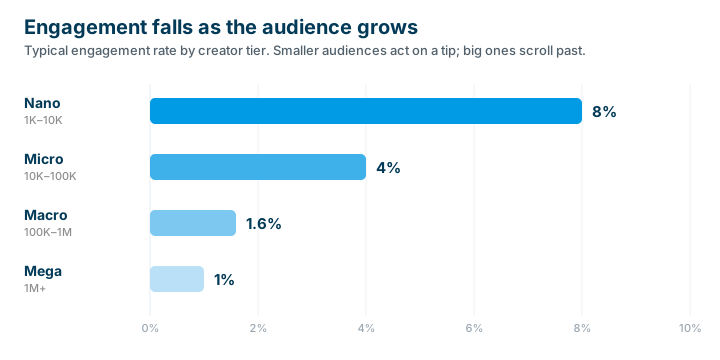
The simulator below makes the trade concrete. It pits the four tiers against each other on the only number that matters, cost per customer, and shows why the giant account is usually the worst deal.
Reach is what you are tempted to buy. Customers are what you actually want. The moment you measure creators on cost per customer instead of follower count, the ranking flips, and the affordable creators move to the front.
Use Repeat Recorder to practise the pitch you send a creator
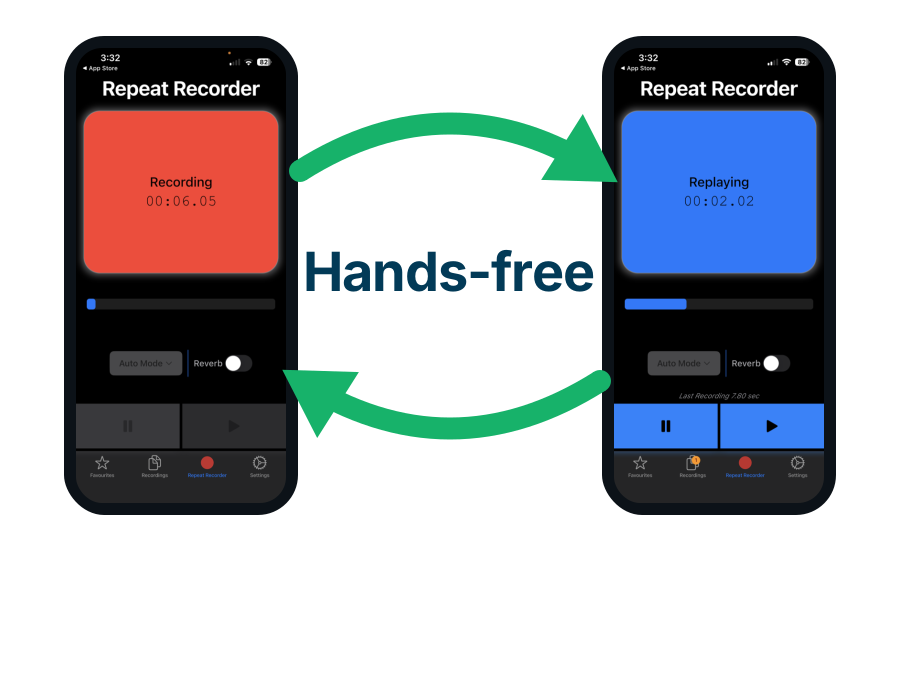
Booking a handful of nano creators instead of one big name means making the same short pitch five or ten times over, and the first version you send is always the worst one. Whether it goes out as a voice note, a call or a written message, saying it out loud is what tells you it is too long. Repeat Recorder, one of my own apps, records you, plays the take straight back, and starts recording again without you touching the phone.
- A nano creator reads like a friend with good taste, and a pitch that sounds like a press release is what breaks that. You cannot hear your own advert voice on a screen, and you can hear it instantly in a recording of yourself, which is the entire reason to play the thing back before sending it.
- Repeat Recorder plays each take back on its own and then starts recording again, so the same thirty second pitch can be run ten times without picking the phone up. That is the entire app. It was built for language practice, speech rehearsal and vocal training, and a pitch is a short speech with money attached.
- Takes worth keeping go into favourites and into folders you name yourself, so the version that got replies stays separate from the one that did not. Nano and micro prices let you approach several creators for the cost of one macro post, and the wording is the only part of that you get to improve between them.

What creators cost from nano to mega
Rates are soft and vary wildly by niche, format and country, so treat this as a map, not a quote. Short-form video (Reels, TikTok) and YouTube cost more than a static post, and usage rights or exclusivity add more again. With that said, here is the shape of the market for a single sponsored post:
| Tier | Followers | Rough price / post | Reality for a small brand |
|---|---|---|---|
| Nano | 1K to 10K | ~$20 to $200 (IG); from ~$5 (TikTok) | Your home base. Often happy with a free product + a small fee. |
| Micro | 10K to 100K | ~$100 to a few thousand ($150 to $500 typical feed post) | The workhorse. Affordable and professional. |
| Macro | 100K to 1M | ~$2,500 to $10,000+ | Usually out of reach on a bootstrapped budget. |
| Mega / celebrity | 1M+ | ~$10,000 to $50,000+ (five to six figures / campaign) | Not your market. |
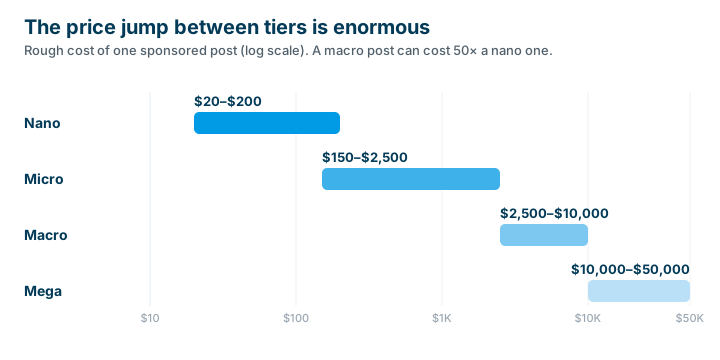
Two things about that table matter more than the exact numbers:
- YouTube is the priciest platform, TikTok the cheapest entry. For the same tier, a YouTube video costs the most (micro YouTube often starts around $500+), while TikTok and short-form have the lowest floors. If your budget is tiny, TikTok and Instagram nano creators are where it goes furthest.
- Marketplace averages are far below the headline ranges. One large creator marketplace, reporting real booked collaborations rather than rate cards, put the average per collaboration at roughly $198 for user-generated content, $350 on TikTok, $364 on Instagram and $675 on YouTube. Those are the numbers a normal small brand actually pays, which is why 47 percent of brands spend under $10,000 a year on influencer marketing at all. You are not an outlier for having a small budget, you are the majority.
So the honest read is: a few hundred dollars is a real influencer budget at the nano and micro tiers. You are priced out of the celebrities, and that is fine, because the earlier section showed they are the worst deal for customers anyway.

Marketplaces, outreach and gig sites solve different problems
There are three routes, and the right answer is usually to mix them. Each trades money for time in a different way.


The platforms where most small-brand creator deals actually happen.
Marketplaces are fast and filtered, for a fee or a cut
- Booking marketplaces let you browse creators with listed prices and book them like a product. Collabstr is the type example. You pay a premium over a cold direct deal, but you skip the searching, the negotiating and the "will they even reply" lottery. Best when your time is worth more than the markup.
- Discovery and analytics tools are search engines over millions of creator profiles. (Modash, Heepsy, HypeAuditor, Upfluence, Aspire and similar), with audience and fake-follower analytics built in. They shine when you want to filter by audience country, niche and engagement quality at scale. Pricing changes often, so check current plans directly rather than trusting any figure you read in an article, including this one.
- The native platform marketplaces (TikTok Creator Marketplace, Instagram's creator tools, YouTube Creator Partnerships, formerly BrandConnect) connect you to creators inside the app itself, with first-party audience data. Availability and access rules vary by region and account type, so treat them as worth checking, not guaranteed.
Direct outreach is slower and gets the best rates
- Search where your customers already are. Hashtags, the platform's own search, and the "related creators" rabbit hole surface people in your exact niche. For a voice-practice app I look at language-learning and public-speaking creators; for a design tool, digital-art and Mac-tips creators. The audience fit matters more than the follower count.
- Let the algorithm find look-alikes. Once you find one good creator, the platform's "suggested" and "people also follow" rails hand you ten more just like them, already filtered by the algorithm for a similar audience.
- A direct deal cuts out the marketplace fee entirely. A direct deal has no marketplace fee and gives you a real relationship you can repeat. The cost is your time and a lower reply rate, which the outreach section below is about fixing.
Gig sites sell cheap content you own and can reuse
- Gig sites sell you content to run as your own ads, not somebody else's audience. Fiverr and similar gig marketplaces are less about borrowing a creator's audience and more about buying user-generated-style content, a real person showing off your product on camera, that you then run as your own Meta or Reddit ad.
- Gig sites are the cheapest way to test several ad videos at once. For the price of one micro post you can commission several short demo videos, run them as ads, and keep the winners. This pairs neatly with the paid-ads pieces on this site.

What every influencer-finding tool costs, ranked
There are dozens of these tools and their pricing is deliberately confusing, so here is the whole landscape in one place, grouped by the job each one does and ranked, within each group, from most accessible to least accessible for a small brand. The pattern that falls out is blunt: the tools that let you sign up and start today are cheap, and the ones that hide their price behind a "book a demo" button are the ones you cannot afford yet.
- Influencer tools split into four jobs. Book and pay creators (self-serve marketplaces), find and vet creators (discovery and analytics tools), run the whole programme (all-in-one enterprise platforms), and the free options (native platform marketplaces and gig sites).
- The tell is whether you can see the price. A public, self-serve price almost always means it is built for small budgets. "Contact sales" almost always means five figures a year.
- The self-serve column tells you whether you can sign up without a sales call. ✓ means you can sign up and use it today, ~ means partly (some tiers are sales-gated), ✗ means you must go through a sales call to get a quote at all.
- The “creators” column is not one kind of number. For the booking marketplaces it counts creators who actually signed up (an opt-in roster you can book). For the discovery and enterprise tools it is the size of their scraped database of public profiles, effectively the whole internet's creators, not a roster. So a 350M database and a 200k marketplace are completely different things; read each count against the group it sits in, and each platform name links out to the tool itself.
The Content / format column flags whether each tool is short-form only or supports YouTube long-form.
The self-serve marketplaces, ranked cheapest first
These let you browse creators and commission a post or a piece of user-generated content without a sales call. The top four are where a small brand should actually start.
| Platform | Creators enrolled | Content / format | Cheapest entry | Extra / condition cost | Self-serve | Best for |
|---|---|---|---|---|---|---|
| JoinBrands | ~250k+ | Multi; incl. YouTube long-form | Free plan; UGC from ~$25/video | 15% platform fee (8 to 12% on paid $99 to $499/mo tiers) | ✓ | Lowest per-video entry, huge creator pool |
| Collabstr | ~200k+ | Multi; incl. YouTube long-form | Free to join | 10% brand fee (5% on Premium); optional Pro $299 / Premium $399 per mo | ✓ | Browsing listed-price creators, direct deals |
| Billo | ~5k+ | Short-form UGC only | $99 / video | All-in per video, no subscription; rush & add-ons extra | ✓ | Fast testimonial / ad-style UGC |
| Trend | Undisclosed | Short-form UGC only | $550 starter pack (~$92/video) | Credit-based; credits expire after 12 months | ✓ | TikTok / Gen-Z UGC |
| Insense | ~75k+ | Short-form only; no YouTube | ~$500 to $650 / mo | Subscription + 7 to 20% marketplace fee on creator pay | ✓ | Ongoing UGC + whitelisting (funded brands) |
| #paid | Undisclosed | Multi; incl. YouTube | ~$499 / mo | Subscription + creator spend; creators curated / vetted | ~ | Curated mid-market campaigns |
| Popular Pays | ~100k+ | Multi; YouTube long-form unclear | Custom (~$500/mo est.) | Quote-based, sales-gated | ✗ | Managed enterprise campaigns |
The discovery and analytics tools, ranked by entry price
These are search engines over millions of profiles, with the audience and fake-follower analytics that the vetting section below relies on. Two things about them surprise people, and both are worth understanding:
- Discovery tools list hundreds of millions of creators because they scrape rather than wait for signups. These tools do not wait for creators to sign up. They continuously scrape the entire public creator population, every public Instagram, TikTok and YouTube profile above a small follower threshold, into one searchable database. So the number is effectively “everyone on the internet with an audience,” which is why Modash lists ~350M while a booking marketplace lists ~200k. The booking marketplaces above only hold creators who deliberately opted in to be hired, a tiny, self-selected slice; these tools hold everybody, whether they have heard of you or not.
- Nobody in a scraped creator database is waiting for your offer. A marketplace creator has already posted a price and is ready to book. A scraped-database creator is just a public profile you happened to find, so you have to reach out cold and negotiate. That is more work, but it reaches the (many) creators who do not list themselves for hire on any marketplace.
- And these tools message creators for you too. Finding is only half the job, so most of them bolt on outreach and a mini-CRM. Modash, HypeAuditor, Influencity and Heepsy send bulk, templated emails and track replies through pipeline stages (invited, negotiating, hired), and Favikon goes furthest with AI-written, multi-channel sequences (email plus Instagram and LinkedIn DMs) to hundreds of creators at once. So you find, vet and mass-contact in one tool, then negotiate and pay each creator directly (more in the mass-message note below). Kolsquare is the lightest here, closer to a Gmail address book than automated sequences.
| Platform | Creators indexed | Content / format | Cheapest entry | Extra / condition cost | Self-serve | Best for |
|---|---|---|---|---|---|---|
| Heepsy | ~11M | Searches YouTube; thinner (TikTok/IG-led) | Free plan; paid ~$69 to $89/mo | Audience filters locked to the ~$249 Plus tier | ✓ | Cheapest paid discovery |
| Favikon | ~10M | 9 networks incl. YouTube; YT depth light | $159/mo annual ($199 monthly) | Runs on a monthly credit system; 7-day trial | ✓ | Ranking & benchmarking creators |
| Influencity | ~200M | IG/TikTok/YouTube; dedicated YT search | ~$168/mo (annual) | Basic capped at 30 analyses/mo; 7-day trial | ✓ | Metered discovery + light campaigns |
| Modash | ~350M | IG/TikTok/YouTube; deep YT data + avg views | $299 / mo | Metered profile opens/unlocks; 14-day free trial; Enterprise from $14,700/yr | ✓ | Large database + creator management |
| HypeAuditor | ~228M | 5 networks; strong YouTube analytics | $299/mo (annual, Basic) | Higher tiers sales-gated; no free trial | ~ | Fraud / audience-quality analytics |
| Kolsquare | ~1.6M | 5 networks incl. YouTube; small YT index | ~€500/mo, annual only | Demo required; annual contract | ✗ | European / enterprise KOL programmes |
Heads-up: the widely-repeated “Modash $99” and “Heepsy $49” figures are outdated. The numbers above are the current mid-2026 rates from each tool’s own pricing page.
The enterprise platforms are overkill for a small brand
These bundle discovery, a creator CRM, campaign workflow and payments into one system. They are built for teams running large, always-on programmes, and nearly all hide their pricing behind a demo. Listed here so you can recognise them and, in most cases, walk past.
| Platform | Creators indexed | Content / format | Cheapest entry | Extra / condition cost | Self-serve | Best for |
|---|---|---|---|---|---|---|
| GRIN | ~32M | Multi; YouTube supported (short-led) | $399 / mo (published) | Month-to-month, 30-day free trial; enterprise “Core” is custom / annual | ✓ | The one enterprise-grade tool a smaller brand can self-start on |
| Upfluence | ~12M | Multi; full YouTube tooling | Custom (~$14k to $16k/yr est.) | 12-month contract, per-seat, modular add-ons | ✗ | Mid-market / enterprise programmes |
| Aspire | ~170M (+~1M opt-in) | Multi; YouTube supported (short-led) | Custom (~$1,000/mo+ est.) | Sales-gated; no trial | ✗ | Mid-market / enterprise DTC brands |
| Klear (Meltwater) | ~30M | Multi, incl. YouTube (depth not detailed) | Custom (not public) | Annual, 12-month minimum | ✗ | Brands already on the Meltwater suite |
| CreatorIQ | ~20M | All networks; strong YouTube long-form | Custom (~$25k to $60k/yr est.) | Annual, per-seat, onboarding fees | ✗ | Large enterprise programmes |
| Traackr | ~7M | ~13 networks; deep YouTube analytics | Custom (~$25k/yr+ est.) | Annual upfront; per-seat minimums | ✗ | Global, always-on programmes |
The figures marked (est.) are third-party estimates, because Upfluence, Aspire, Klear, CreatorIQ and Traackr all hide pricing behind a sales call. GRIN is the exception: it publishes real self-serve tiers.
The free options are native marketplaces and gig sites
The cheapest tools of all. The native marketplaces cost nothing to use (you only pay the creator), and the gig sites charge only a small buyer fee. Their catch is access rules, not price.
| Platform | Creators available | Content / format | Cheapest entry | Extra / condition cost | Self-serve | Best for |
|---|---|---|---|---|---|---|
| TikTok Creator Marketplace (in TikTok One) | ~800k (est.) | TikTok short-form only | Free tool; pay the creator | Needs a TikTok Ads / business account | ✓ | Borrowing a TikTok audience |
| Instagram / Meta Creator Marketplace | 5M+ | Instagram Reels short-form only | Free tool; pay the creator | Region-gated; the deal is handled off-platform | ✓ | Borrowing an Instagram / Reels audience |
| YouTube Creator Partnerships (was BrandConnect) | ~3M (YPP) | YouTube long-form + Shorts | Free tool; pay the creator | YouTube Partner Program creators; 23 countries; self-serve in YouTube Studio | ✓ | Borrowing a YouTube audience |
| Fiverr | ~380k sellers | Mostly short UGC; long-form for hire | Free; pay per gig | +5.5% buyer fee, +$2.50 on orders under $50 | ✓ | Cheap reusable UGC you own |
| Upwork | ~18M freelancers | Any incl. long-form YouTube (for hire) | Free; pay the freelancer | +~3 to 5% client fee, +$0.99 to $14.99 per contract | ✓ | UGC production / hired creators |
Which has the most creators, and which is easiest to search
Because the “creators” column mixes scraped databases with opt-in rosters, “the most influencers” has two honest answers:
- Most by scraped database (find anyone, book no-one automatically). Modash (~350M) and Aspire (~170M) index the largest slices of the public creator population, with HypeAuditor (~228M) and Influencity (~200M) close behind. This is the whole internet's creators, great for searching, but you still have to reach out and negotiate each one.
- Upwork has the largest pool you can hire from directly, about 18 million. Upwork (~18M freelancers) is the largest pool you can hire from directly, then Meta's Creator Marketplace (5M+) and YouTube (3M+). Among the dedicated influencer booking marketplaces, JoinBrands (~250k) and Collabstr (~200k) are the biggest opt-in rosters.
- Collabstr and JoinBrands are the quickest places to browse and book. To browse and book in minutes, Collabstr or JoinBrands. To search the entire creator population by niche, audience and fake-follower score, Modash. To let creators come to you, the campaign-brief route below.
Post one brief and let creators send you priced quotes
Yes, there is an automated way to reach many creators at once and get comparable prices, but only some platforms do it, and they do it in two very different ways.
- The clean version: post once, get priced bids to compare. A handful of platforms let you post a single brief or job and have many creators respond with their own price, so you line the quotes up side by side. The best of these are all self-serve: Upwork (post a job, get dozens of proposals each carrying a bid), a Fiverr Brief (sellers send custom priced offers), Collabstr (post a campaign, creators apply with their rates), and JoinBrands (creators apply at listed per-project prices, and you can bulk-invite up to 100). This is the closest thing to a “mass-message everyone and compare prices” flow.
- Insense, YouTube and TikTok collect creator bids too, but with limits. Insense collects creator bids too, but only on its ~$500/mo subscription; YouTube Creator Partnerships (formerly BrandConnect) lets you send up to 30 proposals at once, though it is limited to YouTube Partner Program creators in its 23 countries; #paid surfaces rate-carrying creators through its “Handraise” feature but caps it at 10 to 15 and vets each by hand; TikTok’s Open Application Campaigns collect applicants, but you still settle the price creator by creator.
- Not a price-comparison tool. Billo and Trend set the price themselves (~$99/video, fixed credit tiers), so you compare creators, not quotes. Meta's Creator Marketplace hands you the creators but the price is negotiated off-platform.
- Discovery tools bulk-email creators instead of collecting quotes from them. Modash, Favikon, HypeAuditor, Influencity and the enterprise CRMs do not run a quote marketplace; instead they let you bulk-email hundreds of hand-picked creators with automated sequences. Favikon is the most automated (AI-written, multi-channel follow-ups across email, Instagram and LinkedIn DMs, up to 300 to 500 creators a campaign), with Modash and Upfluence close behind. But that is outbound cold email asking for a rate, you chase the replies yourself; you do not get a tidy quote board. Use it when you have already picked the specific creators you want to approach.
If what you want is literally “blast a brief and compare prices,” the cleanest free or cheap routes are Upwork or a Fiverr Brief for content you own, and Collabstr or JoinBrands for social influencers. If instead you want to approach specific creators you have hand-picked, the discovery tools (Favikon leading) automate the mass-email version.
Which platforms actually support YouTube long-form
This matters because a lot of the cheapest tools are short-form-only UGC shops, and YouTube long-form (where a creator runs a real integration inside a full video) is a different game. The Content / format column above spells it out per row; here is the short version:
- The dedicated route: YouTube Creator Partnerships (formerly BrandConnect). It is the one native tool built for long-form, placing branded segments or dedicated videos (plus Shorts) on YouTube creators' own channels. Free to use, open to YouTube Partner Program creators (roughly 1,000+ subs, not the old 25k wall) across 23 countries, now including Australia. Full pros and cons in its own section below.
- Booking marketplaces that genuinely do YouTube long-form. Collabstr, JoinBrands (it explicitly lists “YouTube shorts and long-form”) and #paid let you book real YouTube integrations. Do not use Billo, Trend or Insense for this, they are short-form UGC shops, and Insense has no YouTube support at all.
- To find and vet YouTube creators. Modash and HypeAuditor are strongest, with deep YouTube audience data and average-view metrics (the number that actually tells you a long-form video's reach), and Influencity is a solid third. Heepsy, Favikon and Kolsquare cover YouTube but thinly.
- CreatorIQ, Traackr and Upfluence give the best YouTube analytics, at enterprise prices. CreatorIQ and Traackr give the most rigorous YouTube long-form analytics, and Upfluence has the best-verified explicit YouTube tooling of the mid-tier, all sales-gated enterprise platforms.
- To make a long-form video you own. Hire a YouTube video producer or editor on Upwork (or Fiverr). That is production you keep, not a sponsored placement on a creator's channel.
Short version for YouTube long-form: for a sponsored slot on a real YouTuber's channel, start with YouTube Creator Partnerships (formerly BrandConnect) or book through Collabstr / JoinBrands, and vet candidates in Modash. Skip the short-form-only UGC shops (Billo, Trend, Insense) for long-form.
Start free, buy cheap, and skip the enterprise tools
Putting the whole table together, here is the order I would actually reach for on a small budget:
- Start on the free native marketplaces and the free tool plans. Use the native marketplaces (TikTok One, the Meta Creator Marketplace) to borrow reach, plus the free plans on Heepsy, Collabstr and JoinBrands to browse creators. Zero software cost, and enough to run your first collaborations.
- The cheapest paid tools are JoinBrands and Billo to buy content, Heepsy and Favikon to search. To buy content you own: JoinBrands (~$25/video), Billo ($99/video), or Fiverr and Upwork. To find and vet at scale: Heepsy (~$69/mo) or Favikon (~$159/mo).
- Move up to Modash or GRIN once you need a serious creator database. Modash ($299/mo) when you want a serious database, or GRIN ($399/mo) when you want discovery, a creator CRM and payments in one place and can still self-serve.
- Skip the enterprise platforms until you are genuinely scaling. Insense, #paid and Popular Pays are pricier and more managed, and every enterprise CRM (Upfluence, Aspire, CreatorIQ, Traackr, Klear/Meltwater) runs on five-figure annual contracts built for big teams. None of them is a good first move for a small brand.
All prices here are a mid-2026 snapshot taken from each platform's own pricing page where it is public. Creator counts are rough and mix two methods (opt-in sign-ups versus scraped databases), and a few platforms do not disclose them; several of the enterprise database figures are self-reported marketing claims. Rates, tiers, trials and counts change constantly, so treat this as a shortlist to check, not a quote, and always confirm at the platform before you commit.
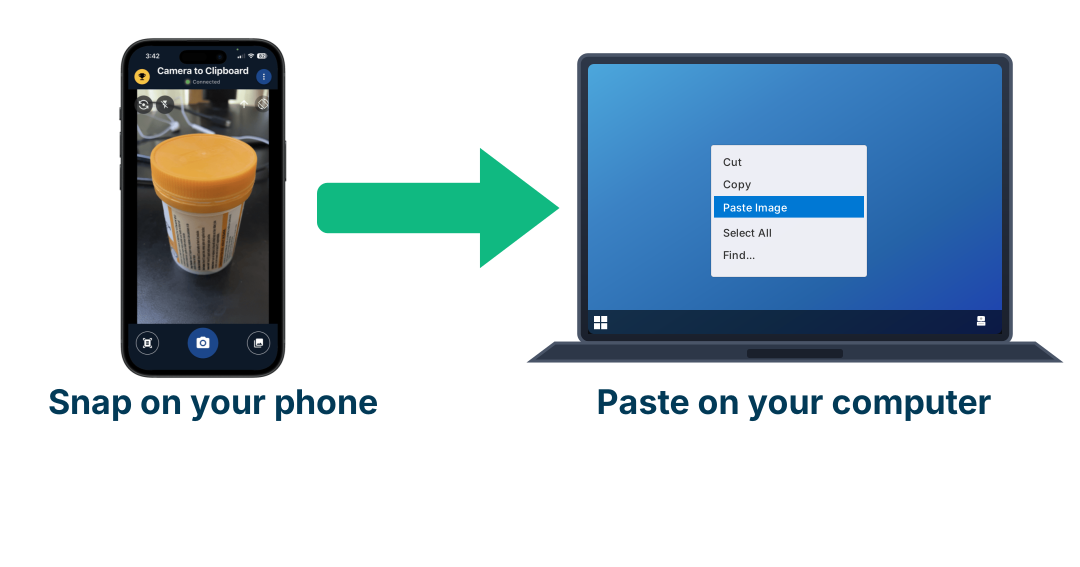
Use Camera to Clipboard to shortlist creators from your phone
Every free route in that table ends in the same place: you scrolling creator profiles in an app on your phone, while the shortlist you will actually decide from is a document on a computer. The screenshots pile up in the phone's photo library and never make the jump, which is why the shortlist ends up being three names you happened to remember. Camera to Clipboard, another of my own apps, is that jump in one step.
- Several pictures at a time can be sent from the phone's photo library, so an evening of browsing creators arrives on the computer in one go. The usual alternative is emailing them to yourself one by one, which is exactly the friction that stops the shortlist from ever being written down.
- Every price in the table above was read off a pricing page in mid-2026 and has to be checked again on the day you buy, so a screenshot of what a platform charged you that morning is worth keeping. The picture arrives as an ordinary image on the clipboard, so Word and Google Docs take it inline and Photoshop opens it as a new layer.
- The phone and the computer send the picture over your own network, with nothing uploaded to a third party in between. There is no cable, no account to sign into and no copy of your creator research sitting on somebody else's server.

YouTube Creator Partnerships is the free native route
Quick clarification first, because the naming genuinely confuses people: BrandConnect and YouTube Creator Partnerships are the same product. YouTube bought FameBit in 2016, renamed it BrandConnect in 2020, and in March 2026 relaunched and broadened it as YouTube Creator Partnerships. So “BrandConnect” is just the old name; Creator Partnerships is the current platform, and it now lives right inside YouTube Studio.
It stands out for a simple reason: it is free to use and built for YouTube long-form, the format that tends to do the most work, and the 2026 relaunch made it far more accessible than the old version. Here is the honest balance.
The case for it
- YouTube Creator Partnerships costs nothing beyond what you pay the creator. No subscription or software fee; you pay only the creator, and Google handles the payment, reporting and measurement on-platform.
- Made for YouTube long-form (and Shorts). The one native option that puts a real integration inside a full video, not just a short UGC clip.
- YouTube Creator Partnerships now takes any Partner Program creator, about 3 million of them. It is open to any YouTube Partner Program creator (~3M of them), roughly 1,000+ subscribers, not the old ~25,000 wall, so you can finally reach the small and mid YouTubers this article rates as the best value.
- Available in 23 countries now (up from a handful), including Australia, plus the US, UK, Canada, France, Germany, India, Japan and Brazil.
- YouTube Creator Partnerships uses Gemini to suggest creators, inside YouTube Studio. It sits in YouTube Studio's “Earn” tab, uses Google's Gemini to suggest creators, and lets you send inquiries, negotiate, pay and measure in one place, with first-party audience data (no fake-follower guessing).
- Creator Partnerships Boost turns those videos into ads, with a reported 30% lift. “Creator Partnerships Boost” (formerly Partnership Ads) turns the videos into Shorts and in-stream ads, with a reported ~30% conversion lift.
The catch
- YouTube Partner Program members only. The creator has to be monetization-eligible, so it still excludes the very smallest channels (under ~1,000 subscribers, or not yet in the YPP) and anyone whose audience is off YouTube.
- Every video is openly flagged as an ad. Because the deal runs through YouTube, the integration must carry the “includes paid promotion” disclosure, so you cannot run a subtle or undisclosed placement. It does not bury the video's reach, but (as the note below explains) paid content is a weaker independent-trust signal to search and AI than a genuine unpaid review, so treat it as reach, not credibility.
- YouTube Creator Partnerships reaches no other platform at all. No TikTok, Instagram or cross-platform reach, a single-channel tool, useful only if YouTube is your play.
- 23 countries, not global. Much broader now, but if your target creators or audience sit outside those markets, you still cannot use it.
- Free tool, not a free campaign. Creators still charge for the integration, so budget for the placement itself.
- Freshly relaunched (2026). The rollout, the AI features and the exact access rules are still settling, so expect some regional and account-level variation.
So the appeal is genuine, and more so than before: for long-form YouTube, it is one of the strongest options going.
- YouTube Creator Partnerships is a clear win for long-form in its 23 countries. You want long-form YouTube, your audience is in one of its 23 countries (Australia now included), and your creators are in the YouTube Partner Program. Free, native, AI-assisted, first-party data, on-platform payments, and now open to small and mid creators too, hard to beat on those terms.
- Look past YouTube Creator Partnerships for TikTok, Instagram or the smallest creators. You need non-YouTube channels (TikTok, Instagram), creators outside its 23 countries, or the very smallest sub-YPP YouTubers. Then use a discovery tool like Modash or a marketplace like Collabstr / JoinBrands, and hire long-form production on Upwork if you just want a video you own.
Bottom line: Creator Partnerships (the tool formerly called BrandConnect) is now the best free way onto YouTube long-form for most small brands, especially since it reaches Australia and no longer walls off small creators. Only reach past it if you need other platforms, or creators outside its 23 countries.
The paid-ad flag does not bury the video, but it weakens trust
It is a fair worry: with a Creator Partnerships deal, YouTube knows the video is sponsored, so will it get buried, and will Google's AI or ChatGPT read “sponsored” in the transcript and discount it? The honest answer splits into two very different questions, getting seen and being believed, and they do not get the same answer.
- Disclosure is required, full stop. A paid partnership has to be disclosed, both by law, the FTC in the US, the ASA in the UK, and for an Australian brand the ACCC under Australian Consumer Law, and by YouTube's own rules. In YouTube Studio the creator ticks “my video contains paid promotion”, and YouTube then shows viewers an “includes paid promotion” notice for the first 10 seconds. Because a Creator Partnerships deal is transacted on YouTube, the platform already knows it is paid, so hiding it is neither possible nor legal.
- Getting the video seen is not penalized. YouTube keeps running ads against these videos (so monetization is unaffected), and the only concrete reach limit it names is that the video is dropped from the separate YouTube Kids app. There is no documented recommendation or search penalty for ticking the box; the algorithm still surfaces it on watch time, engagement and viewer satisfaction. So a sponsored video can and does rack up views.
- But being treated as a trustworthy, independent verdict is a different matter, and this is the real catch. A paid endorsement is a weaker independence signal than a genuine unpaid review, and the big systems treat it that way on purpose. Google flatly refuses to pass ranking credit through paid links (that is exactly what the
rel="sponsored"tag is for), and when Google's AI or ChatGPT synthesise “the best X”, they lean on sources that read as independent. So paid content does not earn the same third-party-trust weight as an unpaid mention. - So the split is simple: a sponsorship buys reach, not credibility. Use a paid integration to create demand and get in front of the right audience, that works, disclosure and all. But the durable “an independent expert recommended it” signal that wins organic search and gets you cited by AI comes from earned, unpaid mentions, reviews and coverage, which is the whole point of the companion piece on ranking in ChatGPT and Google AI. Do not expect a paid placement to double as that trust signal, and, separately, a lazy ad read still underperforms because viewers skip it.
In short: you must mark it as sponsored; that does not bury the video's reach (it still gets recommended and monetized), but a paid placement will never carry the independent-trust weight of a genuine unpaid review, which is exactly what search and AI reward. Sponsorship buys attention; earned mentions buy credibility.

Contacting creators yourself gets the best rates
Full guide: this is the short version. There is a complete, step-by-step walkthrough in how to contact influencers directly, covering where to find a YouTuber's business email, whether to DM or email on TikTok, Instagram and Facebook, the best times to send, and a free copy-paste outreach message builder.
Direct outreach is where the real bargains live, but creators get buried in copy-pasted pitches, so the bar is a message that reads like a human wrote it for them specifically. A few things move the needle:
- Personalise the first line of your outreach email, genuinely. Reference a specific post of theirs and why it fits your brand. Generic blasts get ignored because creators can spot a template instantly, and a mailbox full of them trains people to delete on sight.
- Lead your outreach with what the creator gets, not with what you want. A free product, a small flat fee, an affiliate cut, early access, a shout-out to their audience. Say the offer plainly in the first message rather than making them ask.
- Keep the outreach short and make one concrete proposal. One clear proposal ("a 30 to 60 second video showing off the product, posted to your feed, in exchange for X") beats a vague "let's collaborate". Busy people answer specific, easy-to-evaluate offers.
- Follow up on outreach once or twice, because most yes replies come after a nudge. Most positive replies come after a polite nudge, not the first email. A single follow-up a few days later is normal and expected, not pushy. Marketers who research each creator before writing report dramatically higher reply rates than those who mass-blast.
- Start with people who already use products like yours. A creator who has organically mentioned a competitor or an adjacent product is warm before you say a word, and will often work for a free product alone.
The template blast is free and gets ignored. The researched, personalized note is also free and gets replies. The only difference is the fifteen minutes you spend reading someone's feed before you write, and at nano and micro scale that fifteen minutes is the highest-paid work in the whole campaign.

Creators in lower-cost countries save real money, with tradeoffs
Creators in markets like the Philippines, India, Indonesia, Pakistan, Nigeria and Brazil can be dramatically cheaper than Western equivalents, sometimes an order of magnitude. On some marketplaces, short-form content from Filipino creators lists starting around $5, with mid-range services in the $15 to $35 band and premium work from $400+. That is a genuine unlock for a bootstrapped budget, but it comes with a condition that decides whether it is a bargain or a waste:
- Audience fit is everything, and it is where cheap goes wrong. A $10 post to an audience that will never buy from you is not cheap, it is a total loss. The saving only counts if the creator's followers overlap your actual customers, in a country where your brand matters and, for most brands, in a language your brand speaks.
- Match the geography to your brand. If your brand is global or your target customers are in those markets, a local creator is both cheaper and better targeted, the ideal case. If you are chasing high-value customers in the US, EU or Australia, a creator whose audience is elsewhere can be a poor fit no matter how low the price.
- The safest low-cost play is content, not reach. Commissioning an inexpensive creator to produce a clean demo video that you run as your own ad sidesteps the audience-fit problem entirely, because you choose the targeting. You are buying production, not their followers.
- Vet cheap creators harder, because low prices attract fake followers. Lower prices attract more fake-follower accounts, so the engagement and comment checks in the next section matter more here, not less. Cheap plus fake is the worst outcome; cheap plus genuinely engaged is the best deal on this page.
Honest caveat: I could not find hard, audited data on how well creators in these markets convert Western audiences specifically, so I would test small before scaling. The rates above come from marketplace listings and self-set "starting at" prices, which run lower than what an established local creator with a real audience will actually charge, top Filipino macro and mega creators still command four-figure fees per post.

Flat fee, commission or gifting, and which fits a small brand
The payment model shifts the risk between you and the creator. For a small brand, the sweet spot is usually a small guaranteed payment plus a performance kicker, but each model has a place:
- A flat fee per post is simple, and puts all the risk on you. A fixed price per post. Simple, predictable, and what most creators default to. The risk is all yours: you pay whether or not it works, so it suits proven creators and small, capped bets.
- Affiliate commission caps your downside by paying the creator only per result. You pay a cut of each sale, or a bounty per signup or trial. Great for capping downside, but be careful chasing cheap sign-ups that never become customers; a bounty tied to a real action (a completed purchase, a trial that activates, a subscription) buys quality, not vanity numbers. Reliable cost-per-action benchmarks for creator deals are genuinely hard to pin down, so negotiate the action, not just the price.
- Gifting a free product is the cheapest way to test a creator. The classic starter move. Many nano and micro creators will post in exchange for a free product or a premium unlock, especially for something genuinely useful. It is the cheapest possible entry and a good way to test a creator before paying cash.
- Hybrid: a small flat fee plus a commission. The common structure is a modest upfront fee plus roughly a 10 to 20 percent commission, and surveys find about four in five creators prefer these blended deals. It gives the creator a guaranteed floor (so they take you seriously) while tying most of the upside to results (so your downside is capped). For a bootstrapped brand, this is usually the model to reach for.
Who pays first? The norm for a direct deal is a 50/50 split
Once you agree a price, the next worry is who takes the money risk: do you pay first, do they post first, or do you meet in the middle? For a private deal with someone you have no history with, there is a standard answer, built to protect both sides:
- 50% up front, 50% on delivery. A deposit when they agree, the rest when the content is live or approved. This splits the risk so neither side is fully exposed, and it is what most nano and micro deals settle on.
- Gifting: product first, post after. With a free-product deal you send the product first. It is the payment, so there is no cash to lose, only the cost of the item.
- Small flat fees, paid in one go. Under roughly $100, people usually skip the split and just pay on delivery, or fully up front, because the amount is too small to bother halving.
- Net-30 for bigger creators and agencies. They post, invoice you, and you pay within 30 days. This is a professional norm, not a red flag.
- Marketplace escrow removes the who-pays-first standoff, and is what the fee buys. A marketplace holds the money and releases it on delivery. That trust is exactly what the platform fee buys, and it is why marketplaces exist.
Trust runs both ways, and how to de-risk a first deal
The creator is often the more nervous party, because “fake brand wants free work” is a scam they see constantly. So you are both vetting each other, and making yourself easy to trust is the fastest route to a yes:
- Vet the creator with the free fake-follower checks and past brand deals. Run the free fake-follower checks below, and ask for one or two past brand deals or a media kit.
- Make yourself look trustworthy to the creator, not just the other way round. A real site and product, a professional email (not a brand-new burner), a clear brief, and offering the deposit yourself. Paying half first on a small deal instantly marks you as the real, serious party.
- Start with one post and put the terms in writing. One post first, with a short note you both agree to covering the deliverable, timeline, payment split and usage rights. At this scale an email you both reply “agreed” to is enough.
- Pay by PayPal Goods and Services or marketplace escrow, never bank transfer. PayPal Goods and Services (not Friends and Family) gives buyer protection; a marketplace gives escrow; a bank transfer gives neither side any protection.
The default that works: on a first-time nano or micro deal, say “happy to do 50% now and 50% once it is live,” or lead with gifting. It is the norm, creators expect it, and it protects you both.
Use Repeat Recorder to practise saying your budget out loud
The default that works on a first deal is a sentence somebody has to actually say: half now, half once it is live, and here is the figure. Most people either avoid saying the figure at all or bury it in apology, and both of those cost money on every deal that follows. Repeat Recorder, another of my own apps, plays each take straight back, so you hear which of the two you just did.
- About four in five creators prefer a small flat fee plus a 10 to 20 percent commission, and offering that takes one clear sentence. The sentence is short enough to record, listen to and record again in under a minute, which is the whole of the preparation this needs.
- Repeat Recorder replays each take on its own and then starts recording again, so a price can be said aloud a dozen times until it stops sounding like an apology. It was built for language practice and speech rehearsal, and this is the same drill with a number in the middle of it.
- Naming a figure out loud before the call is the cheapest rehearsal there is, and folders you name yourself keep one creator's version apart from another's. A deal at 50% up front and 50% on delivery is the norm creators already expect, so the only thing left to get right is how steadily you say it.

Negotiation tactics that work on nano and micro creators
Rate cards are opening positions, not fixed prices, especially at the smaller tiers. A few levers reliably lower the number or raise what you get for it:
- Ask for the rate card first, then negotiate against it. Get them to name a price before you reveal a budget. It costs nothing and often the first number is already flexible.
- Bundle several posts to earn a per-post discount. Three posts, or a post plus stories, or a three-month deal, almost always earns a per-post discount over a one-off. Volume is your leverage even when the per-item budget is small.
- Offer the creator non-cash value when you cannot raise the fee. A free product, an affiliate cut, a feature they have asked for, a cross-promotion to your own audience, or the right to be an ongoing partner. These cost you little and can close a deal the cash alone could not.
- Trade usage rights so you can run the creator's video as your own ad. Ask to reuse their video as an ad (creator whitelisting / usage rights). You get durable creative you can run yourself, and framing it as "more exposure and a longer partnership" often justifies the ask on both sides.
- Add a guaranteed floor payment to make a commission deal palatable. On a commission deal, a guaranteed floor payment if sales fall short makes cautious creators say yes without inflating your fixed cost.
- The best creator rates come on the second and third collaboration. The best rates come on the second and third collaboration. Treating a good nano creator as an ongoing partner, paying on time, giving them a heads-up on what is coming next, compounds into rates and enthusiasm a one-off buyer never gets.

Cheap checks that catch most fake followers before you pay
Bought followers are the fastest way to waste a small budget, and the checks that catch them are free and take minutes. Run them on anyone before money changes hands:
- Engagement rate is the single best tell. Divide likes and comments by followers. A healthy nano or micro account sits around 4 to 10 percent. A small account with engagement under about 1 percent is the classic bought-followers signature, plenty of followers, nobody home. This one number filters out most low-effort fraud.
- Read the comments, because fake engagement is generic and real replies are on-topic. Real audiences leave specific, on-topic replies. Fake engagement clusters into generic emoji, "nice!", and bot-like one-liners. Thirty seconds of scrolling the comments tells you a lot.
- Watch for follower spikes and view counts that do not match the follower number. Sudden follower spikes with no viral post to explain them, a following-to-follower ratio that looks off, or view counts that do not line up with the follower number, all point at purchased growth.
- Sanity-check the audience, not just the creator. If a discovery tool or the creator's own media kit shows a big chunk of followers in countries or languages that make no sense for their content, the audience may be bought or simply wrong for you. Free tools and a media-kit request cover most of this without paying for premium analytics.
The budget simulator below ties the whole page together: it takes a fixed spend and lets you split it between one bigger creator and many small ones, so you can see how tier choice, engagement and fit combine into the only score that counts, customers per dollar.
Conclusion: how to find influencers, in one glance
- Nano and micro creators charge the least, engage the most, and usually win on cost per customer. A nano post runs about $20 to $200 against $2,500 and up for a macro one, and nano engagement of 5 to 10 percent against 1 to 2 percent for a mega account is what turns the cheaper post into the cheaper customer. The big accounts win on reach, and reach is not what you are paying for.
- Real booked collaborations average roughly $198 to $675, and 47 percent of brands spend under $10,000 a year. Those marketplace figures are what a small brand actually pays, rather than the headline rate cards, so a few hundred dollars is a genuine influencer budget at the nano and micro tiers. You are not an outlier for having a small budget, you are the majority.
- Write to a shortlist of nano creators yourself, and check each engagement rate before any money moves. Contacting creators directly is free and gets the best rates where a marketplace charges a markup for the speed, a researched first line gets replies where a copy-pasted blast gets deleted, and most yeses arrive after one polite follow-up. Engagement under 1 percent on a small account is the classic bought-follower tell, against a healthy 4 to 10 percent.