
The fear that grips people before a wedding speech is almost never about the words. It is about standing up in front of everyone the couple loves and going blank. The cure is not more writing, it is rehearsal out loud, enough times that the speech is in your body and not just on the card. The most useful rehearsal is to record yourself giving it, play it back, and fix what you actually hear: the rushing, the ramble, the emotional line you keep stumbling on. That record-and-replay loop is exactly what the free Repeat Recorder app was built for, and it works the same whether you are the maid of honour, the best man, or the father of the bride.
The quick answer: to stop freezing, rehearse your wedding speech out loud and record it. Give the whole thing to your phone, play it back, and listen for pace, length, and the lines you stumble on, then run it again. Loop the opening and the emotional beats until they are automatic, and time it so it lands around three to five minutes. Repeat Recorder plays each take straight back and loops it hands-free, so you can practise on the drive or the walk in the days before. 

Why rehearsing out loud is what actually stops you freezing on the day
Going blank happens when the speech only ever lived in your head and on paper. Saying it aloud, many times, is what moves it somewhere the nerves cannot wipe.
- Silent reading is not rehearsal. Reading the card over feels like practice but trains none of the delivery. The first time you say it out loud should not be at the microphone.
- Out loud reveals the real speech. Length, rushing, and the sentences that tangle only show up when you actually speak them, so that is where the fixes are.
- Repetition beats the nerves. A speech you have delivered aloud a dozen times comes back on its own, even when your heart is pounding and your hands shake.
- Hearing it back builds calm. Listening to a take go from shaky to smooth is proof you are ready, and that proof is what settles you on the day.
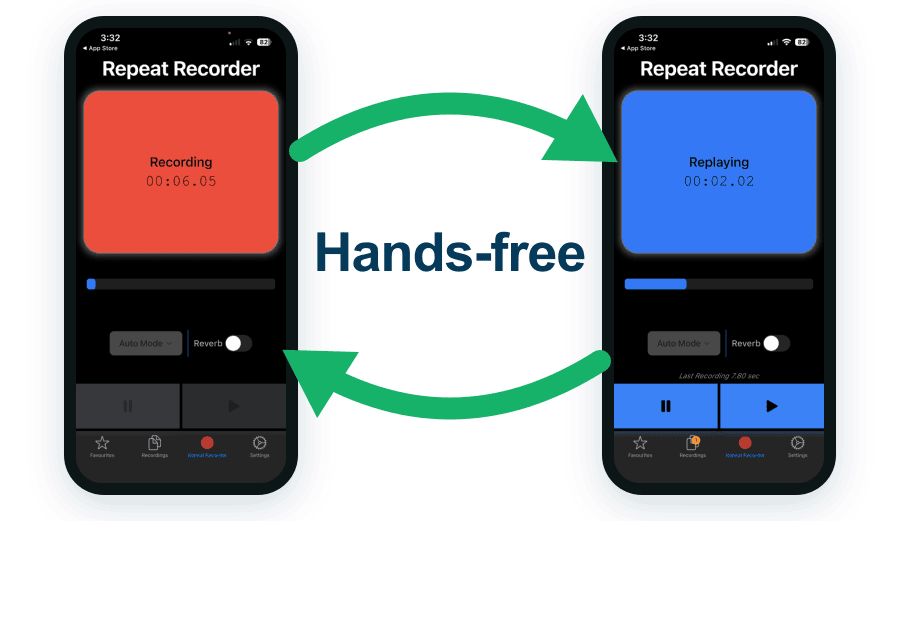
The record and replay loop in Repeat Recorder: give the speech, hear it back, and run the lines that tripped you.

How to rehearse any wedding speech: record it, hear it back, and tighten it
Whatever your role, the method is the same. Do it early and often rather than once in a panic the night before.
- Give the whole speech to your phone. Stand up, speak it start to finish at real delivery pace, even the rough first attempt. That take is your baseline.
- Play it back and time it. Most wedding speeches want to land between three and five minutes. If yours runs long, the recording tells you exactly where to cut.
- Mark the stumbles. Note every line you tripped on or rushed, and the joke or emotional beat that did not land the way you meant.
- Loop the hard bits. The opening, the punchline, and the tender line get their own short recordings, looped until they are automatic.
- Run it again, from memory where you can. Aim to need the card only as a safety net, glancing rather than reading.

Rehearsing a maid of honour or matron of honour speech: warmth without the wobble
A maid of honour or matron of honour speech leans personal and warm, which is exactly where voices crack. Rehearsal is how you keep the emotion without losing the words.
- Drill the emotional line. There is usually one sentence about your friend that catches in your throat. Loop it and say it aloud many times so you can deliver it steadily on the day.
- Check the balance on playback. Listen back for too many inside jokes only your table will get, and swap some for warmth the whole room shares.
- Land the toast cleanly. Rehearse the final "please raise your glasses" line until it is crisp, because that is the moment everyone acts on.

Rehearsing a best man speech: timing the jokes and keeping it kind
A best man speech lives or dies on timing, and timing is a delivery skill you can only rehearse out loud. A recording is the only honest test of whether a joke lands.
- Rehearse the pause before the punchline. Hear on playback whether you rushed the setup. The beat before the joke is what makes it work.
- Test the length. Best man speeches drift long. Time the recording and cut the third story that repeats the first two.
- Check it stays kind. Played back, a tease can sound sharper than you meant. Keep the affection audible and drop anything that only reads as a dig.
- Nail the turn to sincerity. The shift from jokes to a genuine word about the couple is the hardest gear change. Loop that transition until it feels natural.
Rehearsing with Repeat Recorder: loop the line that catches in your throat
Whichever speech you are giving, the run-through above comes down to three moves: say it, hear it back, and run the hard line again. Repeat Recorder, my own app, does all three without you touching the phone. It records you, plays the take straight back about a second after you stop, and then starts recording again.
- Repeat Recorder plays a run-through back about a second after you finish, so you catch the rushing while you can still feel it. Nothing sits between giving the speech and hearing it, which is what makes timing a take and marking the stumbles something you do in one sitting rather than three.
- Any take can loop once, a set number of times, or until you stop it, so the opening, the punchline and the sentence about the couple get said aloud as many times as it takes. Those are the exact lines this article says to drill, and a countdown before each recording gives you a moment to compose yourself first.
- Hands-free automatic mode records and replays on its own, so the drive and the walk in the last week before the wedding become rehearsal. Saying the hardest line under your breath on a commute is where most of the repetitions come from, and none of it needs a free hand.

Rehearsing a father of the bride speech or toast: composure through the emotion
A father of the bride speech carries the most feeling and the highest risk of your voice going. Rehearsal is how you stay composed enough to be heard.
- Say the tender lines until they steady. The sentence about your daughter is the one that breaks people. Record it, loop it, and repeat it aloud until you can get through it.
- Welcome the new family clearly. Rehearse the names and the welcome so you do not fumble them in the moment.
- Keep it to the room's attention span. Warm and heartfelt, not long. The recording keeps you honest on length.
- Practise slowing down. Emotion speeds people up. Listen back and deliberately rehearse a calmer, slower pace so the words carry.

Why Repeat Recorder beats the voice recorder on your phone for speech rehearsal
Your phone already has a voice recorder, and it is fine for a memo. Rehearsing a speech is a different job: many run-throughs you want to hear back instantly, with the hard lines looped hands-free while you pace the room.
- Instant replay the second you finish, so you catch the rush while it is fresh.
- Hands-free automatic mode, so you can rehearse on the drive or the walk in the run-up.
- Loop a line once, a set number of times, or until you stop it, so the emotional beat or the punchline gets drilled as long as it takes.
- A countdown before recording, so you can compose yourself before the first word.
- Named folders to keep your drafts and run-throughs in order.
- Reverb to hear how your voice would carry in a big room.
| For rehearsing a speech | Repeat Recorder | Phone voice recorder |
|---|---|---|
| Records the whole speech | ✔ | ✔ |
| Plays the take back automatically | ✔ | Find the file, press play |
| Hands-free while you walk or drive | ✔ | Tap to record and to play |
| Loop a phrase as often as you want | ✔ | One play at a time |
| Countdown before recording | ✔ | Starts immediately |
| Save takes into named folders | ✔ | One flat list |
| Free | ✔ | ✔ |

A simple week-before rehearsal routine
- Six days out: record the whole speech once and time it. Cut it down to three to five minutes.
- Days five to two: run it daily, looping the opening, the punchline or the emotional line, until each is automatic.
- Anytime: loop the hardest line hands-free on your commute and say it under your breath.
- The night before: give it once, cleanly, from memory with the card as backup, then stop and rest your voice.
A speech rehearsed out loud and heard back is a speech you can trust to come out right when everyone is watching. The words are already written. Saying them, hearing them, and steadying the hard lines is what stops you freezing.