
Clear, confident speech is not a personality trait, it is a set of small habits you can practise. Clarity comes from how you shape words; confidence comes from how you handle pauses, pitch and filler. The catch is that mumbles, upspeak and every "um" are invisible from the inside. You only catch them when you play a take back, which is exactly what the free Repeat Recorder app was built to make effortless.
The quick answer: to speak clearly, open your mouth fully, hit your consonants, slow down and project. To speak confidently, pause on purpose, let your pitch fall at the end of a sentence instead of rising, and cut filler words like "um" and "like". Both halves depend on one habit: record a sentence, listen for the exact word that blurred or the "um", and redo it. Repeat Recorder plays each take back a second after you speak, so the gap between saying it and hearing it disappears. 
How to speak more clearly
Most unclear speech is not a volume problem, it is an articulation problem. Words blur because the mouth barely opens and the consonants go soft. To speak clearly, do three things: open your mouth wider than feels natural, hit the ends of words so the final consonant actually lands, and slow down enough that each word has room to breathe. Good diction feels exaggerated from the inside and sounds completely normal on a recording. Add projection, supporting the voice with a steady breath rather than shouting, and a clear voice carries without strain. Dedicated drills live in diction and articulation exercises, and if pace is your weak spot, how to stop talking too fast covers it in full.
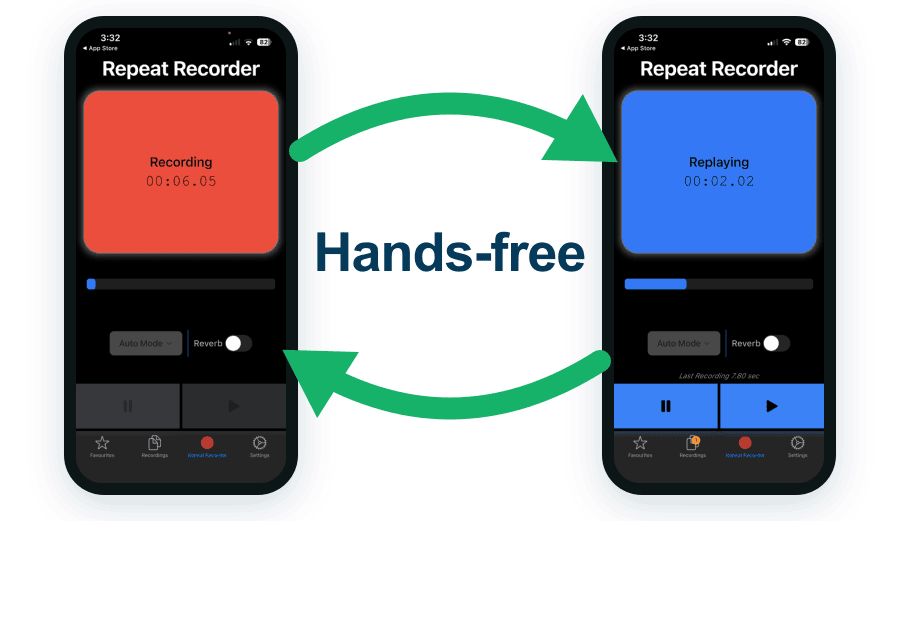
The record and replay loop in Repeat Recorder: speak a line, hear it back a second later, then go again.
How to speak confidently
Confidence is heard, not felt. Three habits carry almost all of it. First, pause on purpose: a short, deliberate silence reads as control, while rushing to fill every gap reads as nerves. Second, let your pitch fall at the end of a statement. When it rises, every sentence sounds like a question, and that upspeak quietly undermines everything you say. Third, cut the filler words, the "um", "like" and "you know" that pad the space between real words. The honest bridge to all three is the same: you cannot hear your own upspeak or your own "um" while you are talking, because your attention is on what comes next. Record a take, play it back, and the exact moment jumps out. Then say the line again without it.
Knowing the habits is easy; making them automatic is the work, and that only happens with repetition and feedback. Speaking with confidence in the moment, on a call, in a meeting, in a public speaking setting, comes from having drilled the pattern beforehand until the pause and the falling pitch feel natural. The practice loop is simple: say a sentence the way you plan to say it for real, play it back, and ask one question. Did I pause, or rush? Did my pitch fall, or rise? Was there an "um" I did not notice? Fix the single thing you caught, and say it again. Do that for a few minutes a day and the new pattern starts to replace the old one, so that under pressure you fall back on the confident version instead of the nervous one.
How to speak properly
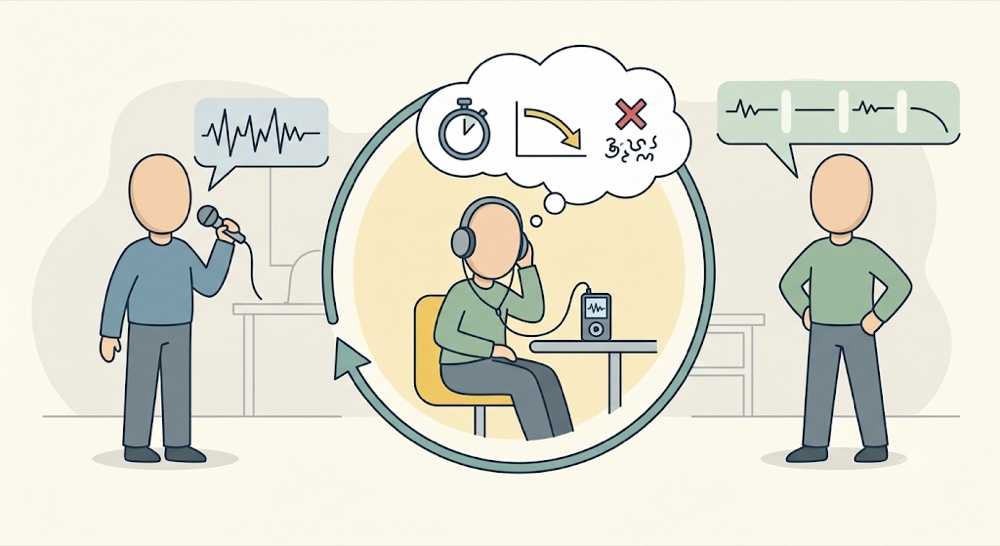
Speaking properly is really clarity and confidence working together: words that land, at a pace people can follow, with pauses in the right places and no filler dragging it down. None of it needs a coach or a stage. It needs a phrase, a recording, and the willingness to redo the take when something slips. The reason so few people ever fix these habits is not effort, it is that they never hear the problem, so they never know which word to correct. Close that gap and progress is fast. For the broader set of voice habits, from breathing to pitch, see how to improve your speaking voice, and to make a clear voice carry across a room, voice projection exercises.
Why you have to hear yourself back
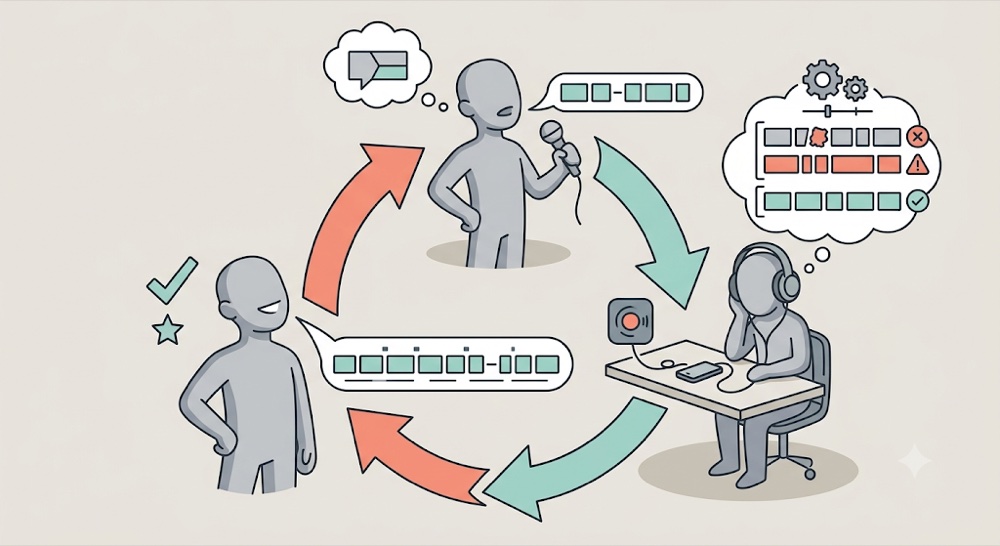
Every habit above shares one requirement: you have to hear yourself, immediately, and try again. Mumbles, rushed words, upspeak and filler are all invisible while you speak because your mind is on the next thought, not the sound coming out. A recording is the honest outside view, the one everyone else hears, and it makes the exact fault obvious. The trouble is that an ordinary voice recorder makes the loop tedious. You stop, hunt for the file, press play, and by the time it starts you have forgotten what you were trying to fix.
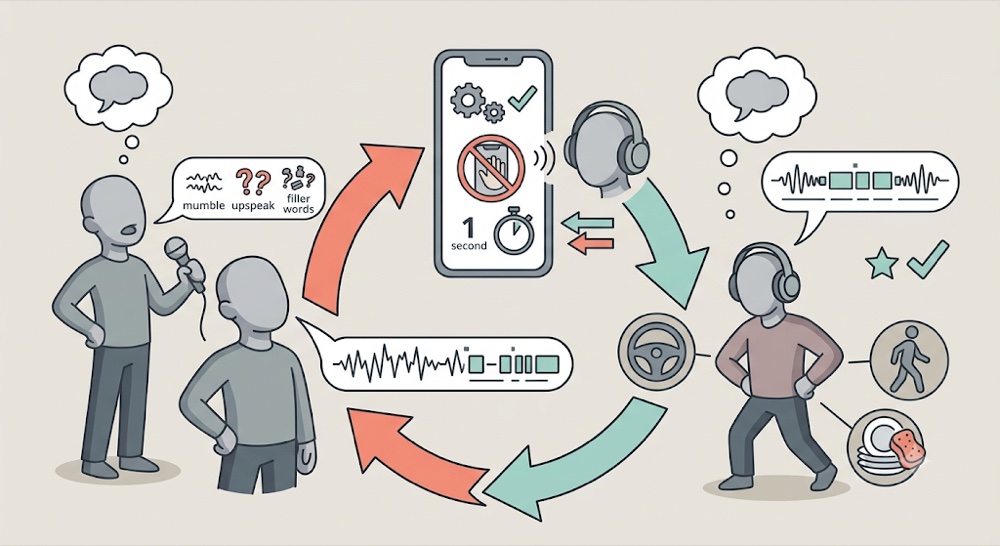
Repeat Recorder removes that dead time. You speak, and a second later your take plays back on its own. In automatic mode you never touch the screen, so you can run these drills while driving, walking, or doing the dishes, not only at a desk.
Why Repeat Recorder beats the voice recorder on your phone
Your phone already has a voice recorder, and it is fine for capturing a memo. For practice it fights you, because practice is not one recording, it is dozens of short takes you want to hear back the instant you finish.
- Instant replay, a second after you stop, with no file to find, so you catch the "um" while it is fresh.
- Hands-free automatic mode, so you can drill on a commute or a walk.
- Loop a take once, a set number of times, or until you stop it.
- A countdown before recording, so you get a breath to prepare and start on a pause.
- Named folders for the lines you are drilling this week.
- Reverb to hear how a line would sit in a room with some space in it.

| For voice practice | Repeat Recorder | Phone voice recorder |
|---|---|---|
| Records your voice | ✔ | ✔ |
| Plays each take back automatically | ✔ | Find the file, press play |
| Hands-free, no tapping | ✔ | Tap to record and to play |
| Loop a phrase as often as you want | ✔ | One play at a time |
| Countdown before recording | ✔ | Starts immediately |
| Save takes into named folders | ✔ | One flat list |
| Reverb to simulate a room | ✔ | Dry recording only |
| Free | ✔ | ✔ |
A simple daily routine
- One minute: read a few lines out loud to warm up, recorder running, aiming to open your mouth wider than usual.
- Two minutes: read a paragraph, listen for the word that blurred and the "um" you missed, then redo it clean.
- Two minutes: say a sentence the confident way, pause and falling pitch, play it back, and compare it against the rushed version.
Five minutes a day, with feedback, beats an hour of talking into the void. Clear, confident speech is a few weeks of short, honest repetitions away.