
Almost nobody believes they talk too fast until they hear a recording. From the inside, your own speech feels a perfectly normal speed, so the first honest look at your speech tempo usually comes as a surprise. The good news is that pace is one of the easiest things to fix once you can hear it, and the loop that fixes it, record, listen, slow down, try again, is exactly what the free Repeat Recorder app was built for.
The quick answer: to stop talking too fast, breathe fully before you start, leave real pauses at commas and full stops, finish every word, and slow the start of each sentence in particular. Then do the one thing that actually changes the habit: record a paragraph, time it, read it again aiming to take several seconds longer, and compare. Repeat Recorder plays each take back a second after you finish, so you hear your real pace while it is still fresh. 
Why you talk too fast
The core reason fast talkers stay fast is simple: your speech always sounds normal to you. From the inside there is no fast, there is only the speed your mouth happens to be running at, and it feels right because it is yours. That is why the fix always starts with a recording. Played back, your real speech tempo is finally the one everyone else has been hearing all along, and it is usually a good deal quicker than you imagined.
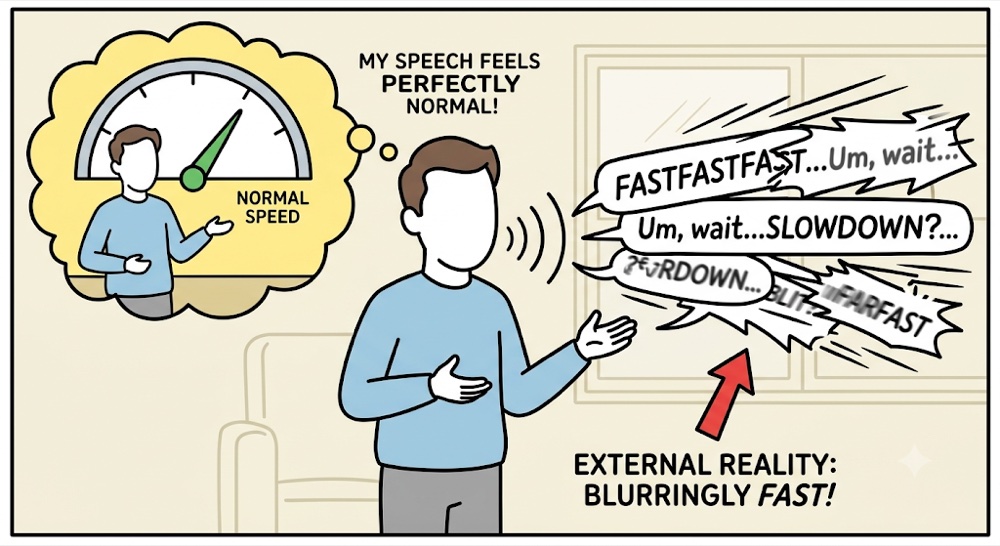
On top of that baseline, a few things push the pace up further. Nerves and excitement speed everyone up. Shallow chest breathing makes you hurry to get the sentence out before you run out of air. And a fear of silence makes you fill every gap, often with filler words like "um" and "so", rather than let a clean pause do its job.
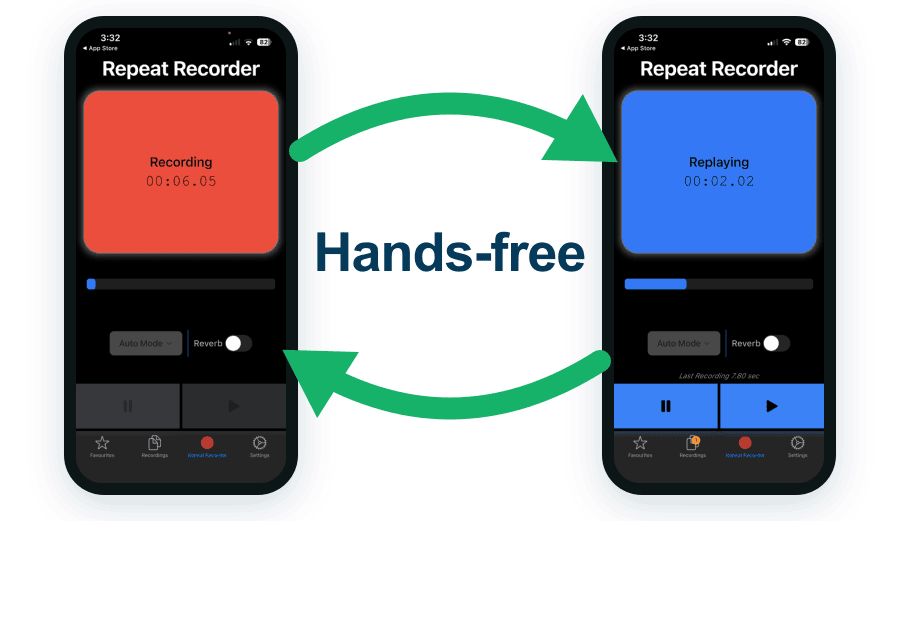
The record and replay loop in Repeat Recorder: speak a line, hear it back a second later, then go again.
How to speak slower and more clearly
Slowing down is not about dragging every word out. It is about a handful of small habits that, together, drop your pace into a range people can actually follow.
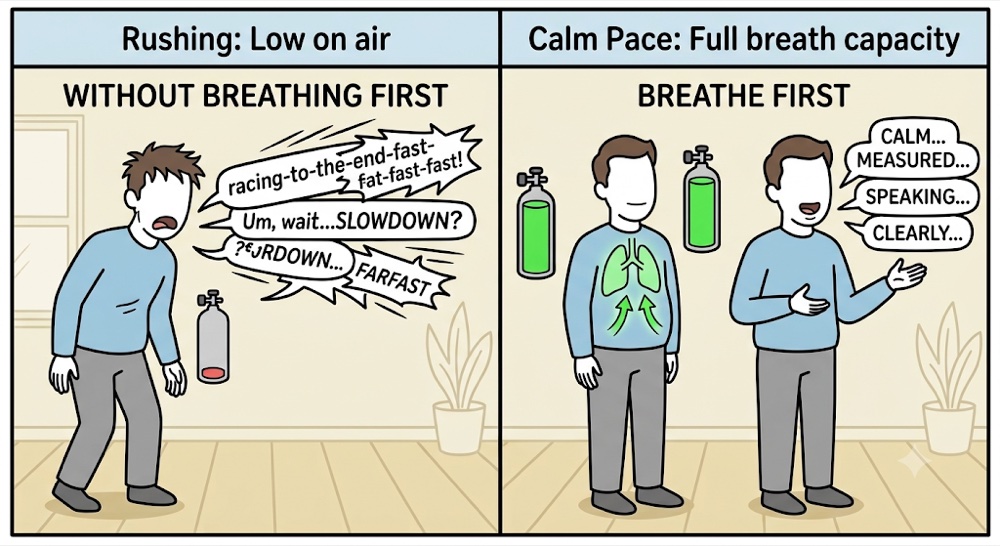
Breathe first
You rush when you run low on air, so a full, low breath before you start gives you the room to speak without racing to the end of the sentence.
Use the pauses
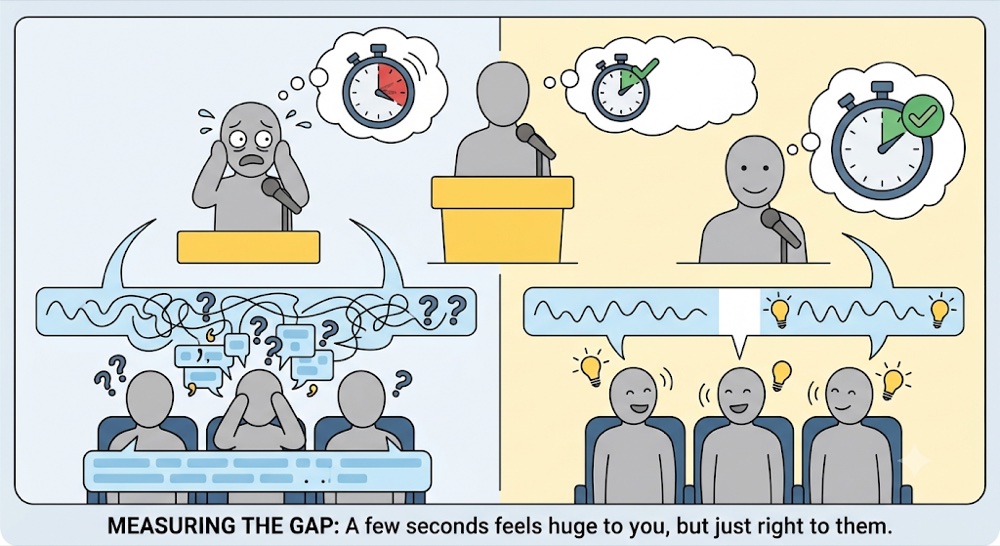
Treat commas and full stops as real stops, not decorations. A pause that feels long from the inside sounds completely normal to a listener, and it gives them a moment to keep up.
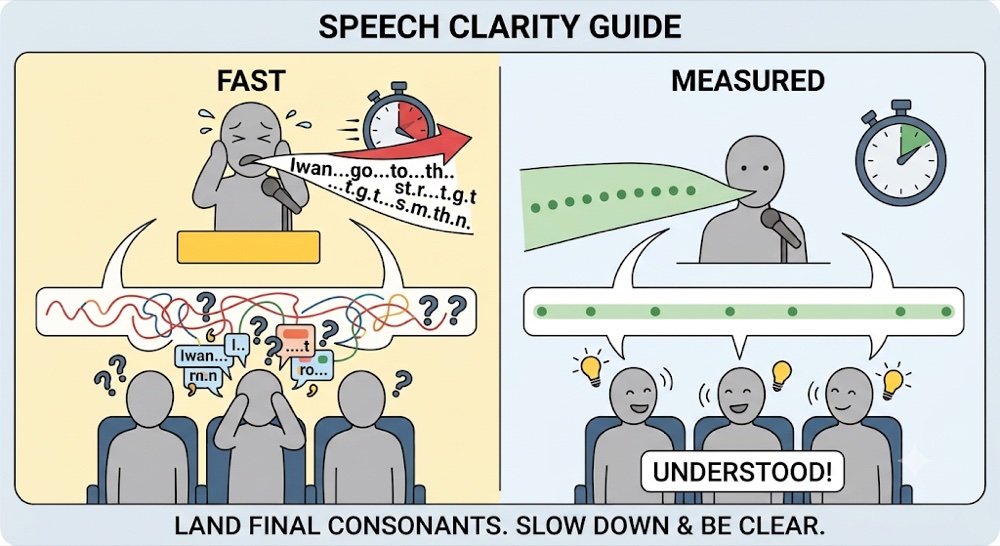
Finish each word
Fast talkers clip the ends of words and run them together. Land the final consonant of each word and the whole thing slows and clears at once.
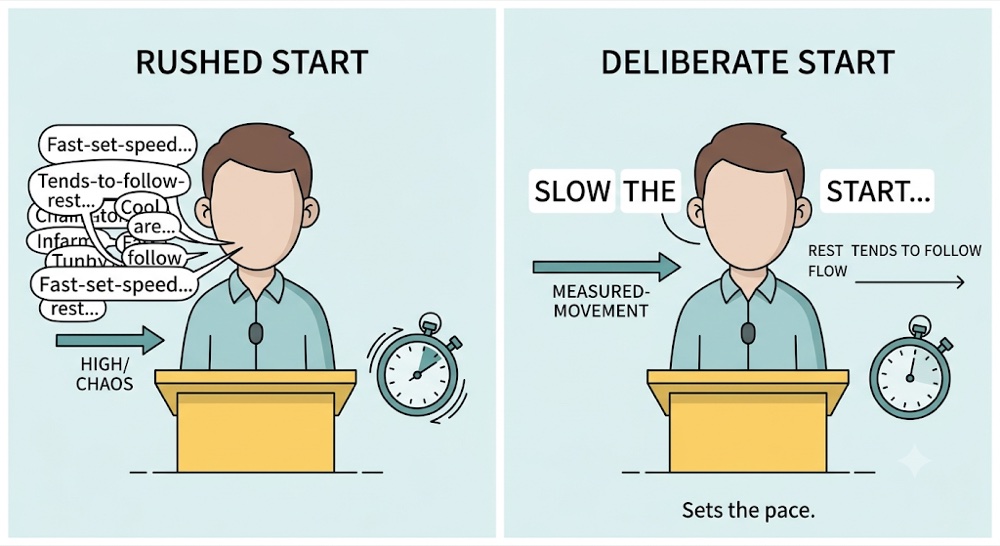
Slow the start
The opening few words of a sentence set its speed, so start each one deliberately and the rest tends to follow.
Set your speaking pace
Techniques help, but the thing that actually resets a lifelong habit is measuring it. This is the core method of the whole article, and it takes about two minutes.
- Record a paragraph at your normal speed. Pick a few sentences you know, and just talk the way you always do.
- Time it. Note how many seconds it took. That number is your starting pace, and it is the thing you are going to move.
- Read it again, slower. Read the exact same paragraph, this time aiming to take several seconds longer. Add breath, add pauses, finish the words.
- Compare the two takes. Play them back to back. The slower one will feel painfully slow while you were recording it and sound clear and confident on playback. That gap between how it feels and how it sounds is the whole lesson.
- Repeat until it feels natural. Do it again the next day, and the slower pace stops feeling slow. That is the point at which the new speed becomes your default.
The measuring is what makes this stick. A vague intention to "slow down" evaporates the moment you start speaking, because you have no reference. A timed before and after gives you one.
How to talk slower and clearer
Once the timed method has shown you the target, keep the habit alive in ordinary situations. A deliberate pause between whole sentences, not just at commas, buys you a beat to breathe and keeps you from running one thought straight into the next. This is the same control good public speaking relies on: the confident speakers you admire are not talking slowly, they are pausing well.
If you tend to speed up under pressure, practise the exact lines you are nervous about, a toast, an introduction, a phone opener, and record them until the calm pace is the one that comes out automatically. And if clarity is part of your problem too, there is a companion piece in how to speak clearly and confidently and the drills in diction and articulation exercises.
Why Repeat Recorder beats the voice recorder on your phone
Your phone already has a voice recorder, and it is fine for capturing a memo. For fixing your pace it fights you, because the method is not one recording, it is a timed take, a slower take, and a back to back comparison you want the instant you finish.
- Instant replay, a second after you stop, with no file to find.
- Hands-free automatic mode, so you can practise while driving or walking.
- Loop a take once, a set number of times, or until you stop it.
- A countdown before recording, so you get a breath to prepare.
- Named folders for the passages you are drilling this week.
- Compare takes so your fast version and your slow version sit side by side.

| For fixing your pace | Repeat Recorder | Phone voice recorder |
|---|---|---|
| Records your voice | ✔ | ✔ |
| Plays each take back automatically | ✔ | Find the file, press play |
| Hands-free, no tapping | ✔ | Tap to record and to play |
| Loop a passage as often as you want | ✔ | One play at a time |
| Countdown before recording | ✔ | Starts immediately |
| Save takes into named folders | ✔ | One flat list |
| Reverb to simulate a room | ✔ | Dry recording only |
| Free | ✔ | ✔ |
A simple daily routine
- One minute: read a paragraph at your normal speed, recorder running, and time it.
- Two minutes: read the same paragraph slower, aiming for several seconds longer, then compare the two takes.
- Two minutes: practise one real line you get nervous about, breathing fully and pausing between sentences, until the calm pace comes out on its own.
Five minutes a day, with feedback, beats an hour of telling yourself to slow down. The pace you want is a couple of weeks of short, timed repetitions away.