
Table Topics is the part of a Toastmasters meeting that makes even confident speakers sweat: you are called up with no warning and have to speak for a minute or two on a subject you have never seen. It is pure impromptu speaking, and the only way to get good at it is to do it, over and over, under something like real conditions. The catch is that a club meets once a week, which is not enough reps. You can practise it alone by recording a prompt, answering it cold, and playing yourself back, and that record-and-replay loop is exactly what the free Repeat Recorder app was built for.
The quick answer: to get better at Table Topics, practise impromptu speaking on your own. Record a batch of random prompts, play one back cold, and answer it out loud for a minute while recording. Then listen back for rambling, filler words and whether you actually made a point. A simple structure keeps you from wandering. Do it a few times a week and being put on the spot stops being frightening. Repeat Recorder plays each take straight back and loops prompts hands-free. 

What Table Topics are and why speaking on the spot is so hard
Table Topics asks you to think and speak at the same time, in front of people, with no preparation. That combination is what makes it uniquely difficult.
- No time to plan. You get the question and you are already speaking. There is no chance to draft, so you are building the answer as it comes out.
- The pressure spikes the nerves. Being singled out unexpectedly triggers exactly the fight-or-flight rush that makes your mind blank and your words speed up.
- Silence feels louder than it is. A two-second pause to think feels like an age, so people fill it with um and rambling instead of a confident breath.
- It is a skill, not a talent. The people who are smooth on the spot are not gifted, they have simply done it enough that the panic has worn off. That is trainable.
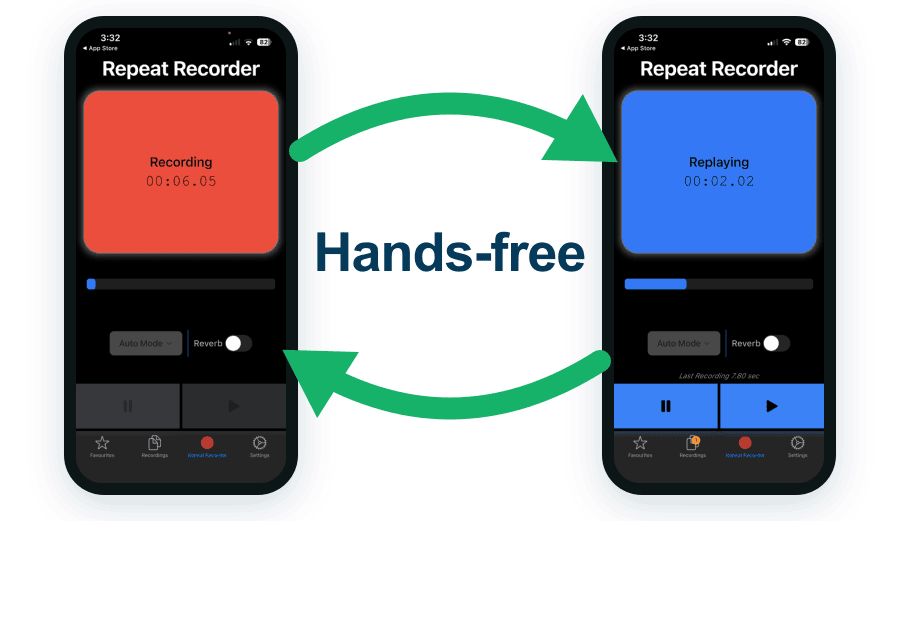
The record and replay loop in Repeat Recorder: hear a prompt cold, answer it, then play yourself back.

Why you can practise impromptu speaking alone, without a club meeting
You do not need an audience to rehearse thinking on your feet. What you need is the surprise of an unseen prompt and an honest recording of how you handled it.
- Recorded prompts create the surprise. Record a stack of random questions, shuffle to one, and you get the same cold start a meeting gives you.
- The recording is your evaluator. Played back, you hear your own filler, rambling and dead ends far more clearly than any club feedback could point out in the moment.
- You get unlimited reps. A meeting gives you Table Topics maybe once. Alone you can do ten answers in fifteen minutes, and reps are what wear the panic down.
- Low stakes let you experiment. On your own you can try a structure, fail, and try again, without burning a rare turn in front of the club.

How to practise Table Topics by yourself: record a prompt, answer cold, listen back
Here is the loop. Keep the answers to about a minute, the way a real Table Topic runs.
- Build a prompt bank. Record twenty or thirty random questions into the app, one after another, then leave them. Search online for "Table Topics questions" if you need a source.
- Shuffle to one and answer immediately. Do not let yourself see it coming. Start speaking within a second or two and keep going for about a minute, recording as you speak.
- Play it back honestly. Did you make a clear point? How much filler? Where did you ramble or trail off?
- Answer the same prompt again. Now apply one fix: open with your point, or cut the padding. The second take is almost always tighter.
- Move on to a fresh prompt. Variety is the point. The more different questions you handle, the less any surprise can throw you.

A simple structure that keeps an impromptu answer from rambling
The reason people wander is that they start talking with no destination. A tiny structure fixes it, and you can apply it in the second you take to breathe.
- Open with your point. Say your position or answer in the first sentence, then spend the rest supporting it. Deciding the point first stops the aimless drift.
- Give one reason or example. A single concrete story or reason is more than enough for a minute, and it keeps you anchored.
- Land a clear close. Return to your point in one line. A definite ending beats trailing off, and on playback you will hear the difference.
- Use the pause, do not fear it. A calm breath before you start reads as confident. Rehearse taking it instead of filling it.
Why Repeat Recorder beats the voice recorder on your phone for impromptu practice
Your phone already has a voice recorder, and it is fine for a memo. Impromptu practice is a different job: a bank of prompts to play back cold, and many short answers you want to hear straight back and review hands-free.
- Instant replay the second you finish, so you review the answer while it is fresh.
- Hands-free automatic mode, so you can drill prompts on a walk or a commute.
- Loop a prompt or an answer as often as you like, to attack the same question until you nail it.
- A countdown before recording, so you rehearse starting under a little pressure.
- Named folders for your prompt banks and your best answers.
- Reverb to hear how you would carry in a meeting room.
| For impromptu speaking practice | Repeat Recorder | Phone voice recorder |
|---|---|---|
| Records your answer | ✔ | ✔ |
| Plays the take back automatically | ✔ | Find the file, press play |
| Hands-free while you walk or drive | ✔ | Tap to record and to play |
| Loop a phrase as often as you want | ✔ | One play at a time |
| Countdown before recording | ✔ | Starts immediately |
| Save takes into named folders | ✔ | One flat list |
| Free | ✔ | ✔ |

A simple weekly impromptu-speaking routine
- Once a week: record a fresh batch of ten to twenty random prompts.
- Most days: answer three prompts cold, about a minute each, recording as you go.
- After each: play it back, name one thing to fix, and answer that prompt once more.
- Anytime: loop a prompt hands-free on your commute and answer it under your breath.
A few minutes of cold prompts a week, recorded and reviewed, is what turns being put on the spot from a fright into a routine. The club gives you the stage; practising alone is how you walk onto it ready.