
Projecting your voice is not about shouting, it is about being heard clearly and without strain. The exercises below build the three things that carry a voice across a room: breath support, resonance, and an open throat. The part that makes them stick is feedback, recording an attempt and hearing your true volume back, because you cannot judge loudness from inside your own head. That loop is what the free Repeat Recorder app was built for.
The quick answer: to project, take a full low breath, push volume up from your diaphragm rather than your throat, open your throat, and aim the sound at the back wall. Do not shout, shouting squeezes the throat and tires the voice within minutes. Then do the one thing most people skip: record an attempt from a few steps back, listen to how loud and even it really is, and try again. Vocal projection feels loud inside your head long before it is loud in the room, so the recording is the only honest judge. Repeat Recorder plays each take back a second after you speak, so the gap between saying it and hearing it disappears. 
How to speak louder and clearer
Loud and clear are two different problems, and shouting solves neither. Real vocal projection comes from a supported column of air, an open throat, and resonance ringing in the bones of your face and chest, not from forcing sound out of a tight throat. Start with breath: put a hand on your stomach and breathe in so the hand moves out. Diaphragmatic breathing gives you the steady pressure that carries a voice, and it is what stops the ends of your sentences fading to nothing. Then keep the throat open, as if at the start of a yawn, so the sound has somewhere to resonate instead of pinching off.
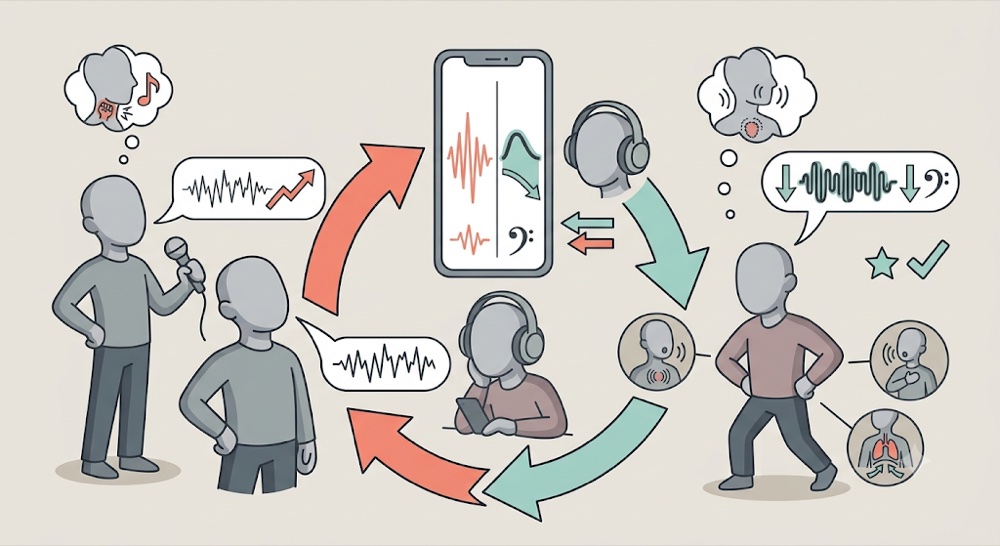
The catch is that you cannot hear any of this properly from the inside. Your voice reaches you partly through the bones of your skull, so it always sounds fuller and louder to you than it does to the room. Record a sentence from a few steps back, listen, and you finally hear the volume and clarity the room hears, then you know what to adjust.
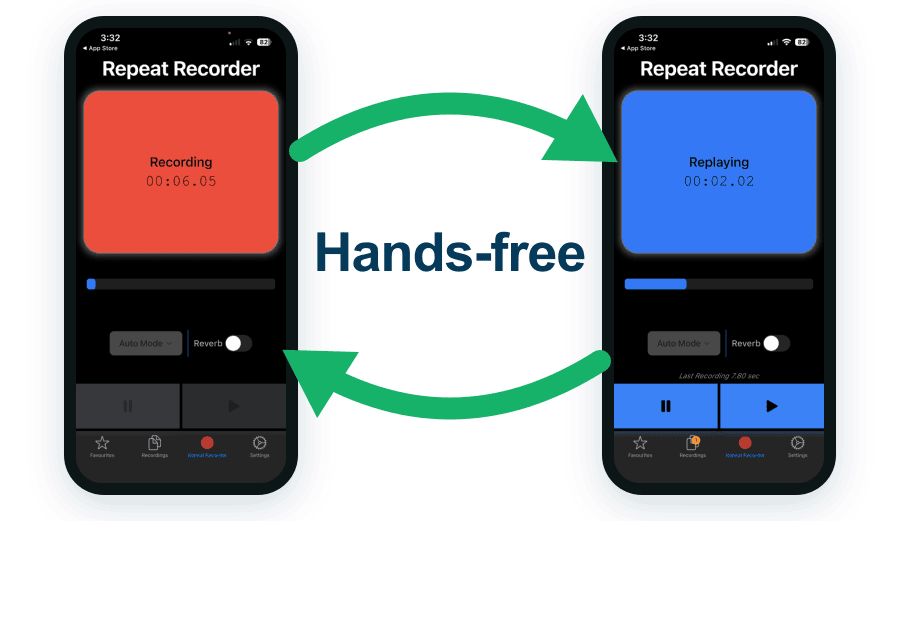
The record and replay loop in Repeat Recorder: speak a line, hear it back a second later, then go again.
How to speak louder and more confidently
Confidence and volume feed each other. A voice that fades sounds unsure, and a voice that carries sounds like it means what it says. The trick is that a projected voice is lower and steadier than a shouted one, so aim to add volume without letting the pitch climb. When people try to get louder by pushing, the pitch rises, the throat tightens, and it reads as strained rather than confident. Instead, keep the pitch in its natural range and let the extra volume come from breath support underneath it.
Resonance is the other half. Humming until you feel a buzz in your lips, nose and chest teaches your voice where to ring, and a resonant voice sounds bigger at the same effort. This is vocal resonation, and it is why two people at the same loudness can sound completely different in a room. Practise a line, play it back, and listen for whether it sounds full and grounded or thin and pushed.
Exercises to speak louder
These are the core projection drills. Do them with the recorder running, from a few steps back, so every attempt is measured by the room and not by your own head.
- Sustained "ah" on a full breath. Take a deep low breath and hold a steady, open "ah" for as long as it stays even. If it wobbles or fades, you are running low on air or pinching the throat. Support it from the diaphragm and go again.
- Count 1 to 10, getting louder. Say each number a little louder than the last, all the way to ten, without letting the pitch rise. This trains volume and pitch as separate controls. Play it back and check that ten is genuinely louder, not just higher.
- Humming for resonance. Hum a comfortable note and feel for the buzz in your face and chest. Move it around until it rings. Then open the hum straight into a word so the word carries the same resonance.
- Straw phonation. Speak or hum gently through a straw for a minute. It balances the pressure above and below the vocal folds, so your voice comes out warmer and easier, and louder for less effort, once you take the straw away.
- Speak to the back wall. Read a passage imagining a person at the very back of the room, and aim the sound at them. Do not lean or strain, just intend the distance. Record it and hear whether it would actually reach that far.
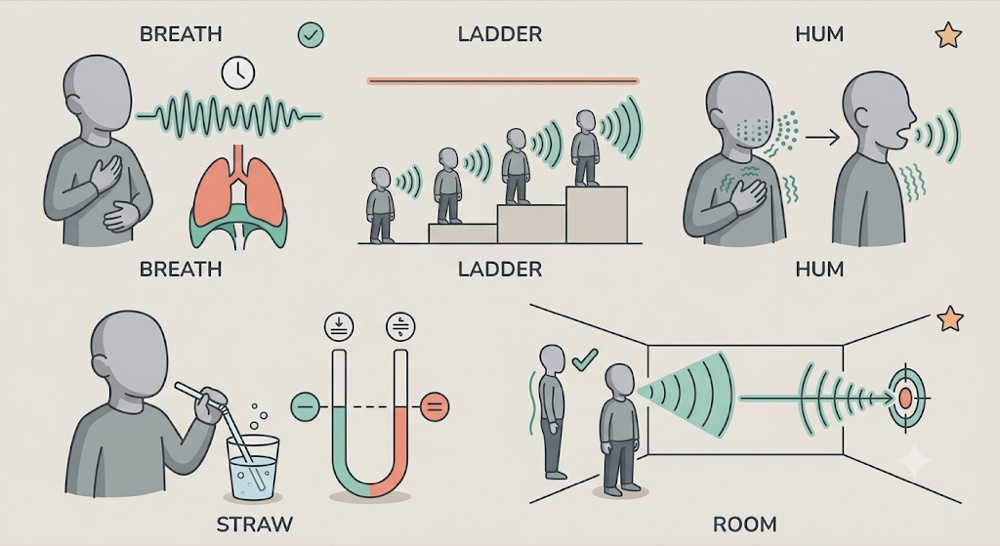
Support every one of these from the diaphragm. The moment the volume comes from the throat instead, you are shouting, and a shouted voice tires and cracks within minutes while a supported one lasts an hour.
Voice projection activities
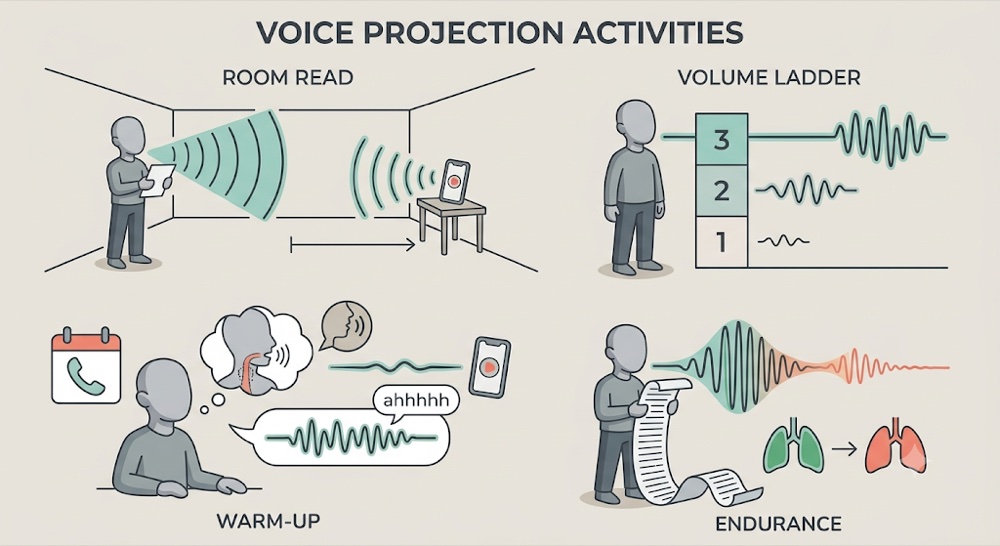
Drills build the mechanics, but projection has to survive real speaking. These activities put it to work, and every one of them improves faster when you can hear the take back straight away.
- Read aloud across the room. Stand at one end, put your phone at the other recording, and read a paragraph aiming to fill the space. Listen back and you hear exactly how much of it arrived.
- Volume ladder. Read the same sentence three times, quiet, medium, then full projection, keeping the pitch level throughout. Compare the three takes to feel the difference between loud and merely high.
- Warm-up before it matters. Before a call, class, or presentation, run a minute of humming and a sustained "ah" with the recorder on, so you have a baseline take and a voice already settled into its fuller range.
- Endurance read. Project a longer passage and listen for where the volume starts dropping. That is where your breath support runs out, and it tells you exactly what to build next.
Hands-free automatic mode lets you drill any of these while driving, walking, or doing the dishes, so projection practice is not stuck at a desk.
Why Repeat Recorder beats the voice recorder on your phone
Your phone already has a voice recorder, and it is fine for capturing a memo. For projection practice it fights you, because practice is not one recording, it is dozens of short takes you want to hear back the instant you finish, so you can judge the volume the room actually heard.
- Instant replay, a second after you stop, with no file to find.
- Hands-free automatic mode, so you can drill projection on a commute or a walk.
- Loop a take once, a set number of times, or until you stop it.
- A countdown before recording, so you get a breath to prepare and support the sound.
- Named folders for the drills you are working on this week.
- Reverb to hear how your projected voice would sit in a room with some space in it.

| For voice practice | Repeat Recorder | Phone voice recorder |
|---|---|---|
| Records your voice | ✔ | ✔ |
| Plays each take back automatically | ✔ | Find the file, press play |
| Hands-free, no tapping | ✔ | Tap to record and to play |
| Loop a phrase as often as you want | ✔ | One play at a time |
| Countdown before recording | ✔ | Starts immediately |
| Save takes into named folders | ✔ | One flat list |
| Reverb to simulate a room | ✔ | Dry recording only |
| Free | ✔ | ✔ |
Who these exercises are for and a simple routine
Voice projection matters for teachers holding a classroom, presenters in a big room, actors and singers, anyone leading a meeting, and anyone who is simply tired of being asked to repeat themselves. The mechanics are the same for all of them, and so is the routine.
- One minute: hum and hold a sustained "ah" to warm up and find resonance, recorder running.
- Two minutes: count 1 to 10 getting louder without going higher, listen, fix any pitch creep, repeat.
- Two minutes: read a paragraph to the back wall from a few steps back, then play it back and hear the true volume.
Five minutes a day, with feedback, beats an hour of straining into the void. A voice that carries is a few weeks of short, honest repetitions away.