
Of all the places you can be mentioned, Quora is the low-risk one you can actually use this week, and it is unusually strong on Google’s AI. Here is why, and how to do it honestly.
Quora is a low-risk lever you can use this week
Quora is the mirror image of Wikipedia here: you are allowed to take part, it is low-risk, and it is one of the most-cited sources in Google’s AI answers.
- It is a top-cited source, especially on Google's AI. Semrush ranked Quora the most-cited domain in Google's AI Overviews, and fourth in AI Mode, appearing in roughly one answer in fourteen. It is weaker on ChatGPT, so treat Quora as a Google-AI lever.
- You are allowed to mention your own product, if the answer is genuinely useful. Quora dropped its blanket ban on self-promotion years ago; the line is value to the reader versus a traffic grab. A real, on-topic answer that mentions your app where it fits is fine, a drive-by link drop is treated as spam and removed.
- Relevance wins, engagement only helps at the edges. Answers are surfaced by how well they match the question, not by keyword stuffing, and genuinely-discussed, well-upvoted answers get cited a little more. Write the best honest answer to a real question, do not chase votes.
So of the two, Quora is the one to actually start on. Wikipedia is the prize you earn later; Quora is the lever you can pull now. (Both sets of citation figures come from vendor studies that vary by method, so treat the rankings as directional, not gospel.)
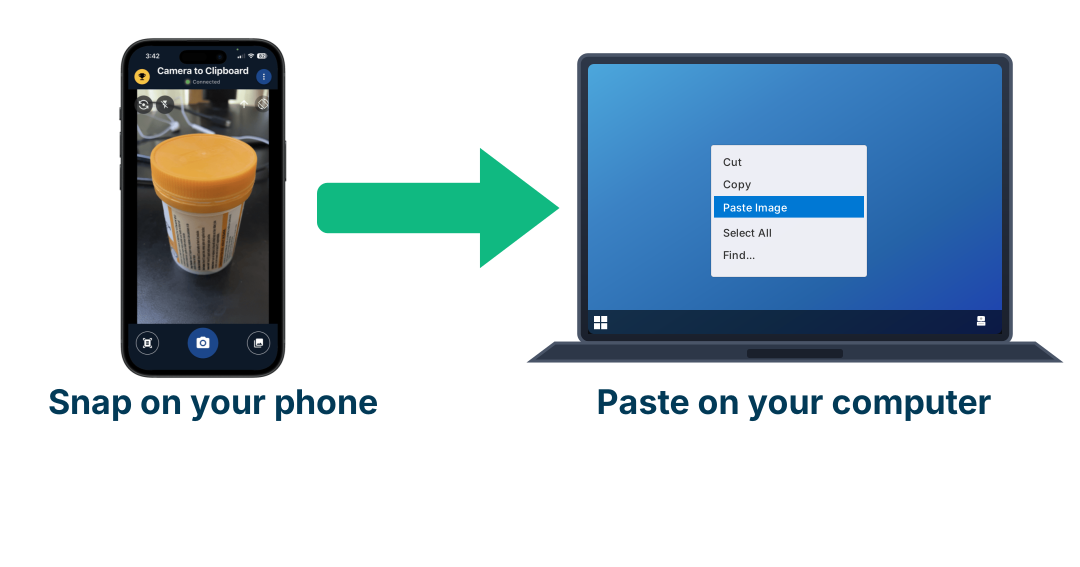
Use Camera to Clipboard to add a screenshot to a Quora answer
The line between an answer that is allowed to name your product and one that gets removed as spam is whether it helps somebody who never clicks through, and a picture of the thing being described is the cheapest way to land on the right side of it. When the product is a phone app, that picture is on a phone and the answer box is on a computer. Camera to Clipboard, one of my own apps, closes that gap in a single step.
- Quora was ranked the most-cited domain in Google’s AI Overviews, so a single answer there is worth taking seriously enough to illustrate. It appears in roughly one AI Mode answer in fourteen, which is a return no other place you are actually allowed to post can match.
- A picture taken in Camera to Clipboard, or picked out of the phone’s library, is on your computer’s clipboard by the time you look up. There is no emailing it to yourself, no cable and no upload to somebody else’s website in between, and several can be sent at once when one screen is not enough to make the point.
- A picture sent by Camera to Clipboard arrives as an ordinary clipboard image, so any box that accepts a pasted picture accepts it. That covers the Quora answer box in a browser, and Photoshop or GIMP if the screen needs cropping or labelling first, where it opens as a new layer or a new document.
Conclusion: how Quora helps you rank in Google AI answers
- Quora is a top-cited source in Google’s AI answers that you are allowed to post on yourself, which Wikipedia is not. The blanket ban on self-promotion went years ago, so the only line an answer has to stay on is real value to the reader rather than a grab for traffic.
- Semrush ranked Quora the most-cited domain in Google’s AI Overviews and fourth in AI Mode, appearing in roughly one answer in fourteen. It is much weaker on ChatGPT, so use it as a way into Google’s AI rather than into every assistant, and read the rankings as directional because the vendor studies behind them vary by method.
- Write the best honest answer you can to a real Quora question and name your app only where it genuinely fits. Answers are surfaced by how well they match the question, so stuffing keywords and chasing upvotes do almost nothing, and a drive-by link drop is removed as spam.